You are legally and ethically allowed to change dialysis centers, change nephrologists, seek a second opinion, and request copies of your medical records. However, abrupt transfers without proper endorsement may place you at serious risk. The safest transfer is planned, documented, coordinated, and continuous — without missed sessions.Ikaw ay legal at etikal na pinahihintulutan na magpalit ng mga dialysis center, magpalit ng nephrologist, humingi ng pangalawang opinyon, at humiling ng mga kopya ng iyong mga medikal na rekord. Gayunpaman, ang abrupto na paglilipat nang walang tamang endorsement ay maaaring maglagay sa iyo sa malubhang panganib. Ang pinakaligtas na paglilipat ay planado, dokumentado, koordinado, at tuloy-tuloy — nang walang naligtaang sesyon.Ikaw ay legal ug etikal nga gitugotan sa pagbag-o sa mga dialysis center, pagbag-o sa nephrologist, pagpangita og ikaduhang opinyon, ug paghangyo og mga kopya sa imong mga medikal nga rekord. Apan, ang abrupto nga pagbalhin nga wala'y hustong endorsement mahimong magbutang kanimo sa seryosong peligro. Ang labing luwas nga pagbalhin planado, gi-dokumento, koordinado, ug padayon — nga wala masayop nga sesyon.Ikaw ay legal at etikal na pinahihintulutan na magpalit ning mga dialysis center, magpalit ning nephrologist, huminge ning pangalawang opinyon, at humiling ning mga kopya ning iyong mga medikal a rekord. Gayunpaman, ing abrupto a paglilipat nang wala tamang endorsement ay malyaring maglagay sa iyo king malubhang panganib. Ing pinakaligas a paglilipat ay planado, dokumentado, koordinado, at tuloy-tuloy — nang wala naligtaang sesyon.
Your transfer, done right.Ang iyong paglilipat, ginawa nang tama.Ang imong pagbalhin, nahimo sa husto.Ing paglilipat mu, ginawa nang tama.
Hemodialysis patients in the Philippines sometimes need to transfer to a different dialysis center — because of a relocation, a change in the family's financial situation, a referral, or a personal decision to seek a different physician. This is completely normal and entirely within your rights.Ang mga pasyenteng nasa hemodialysis sa Pilipinas ay minsan ay kailangang maglipat sa ibang dialysis center — dahil sa paglipat ng tirahan, pagbabago ng sitwasyon ng pamilya, referral, o personal na desisyon na humanap ng ibang doktor. Ito ay ganap na normal at nasa loob ng iyong mga karapatan.Ang mga pasyente sa hemodialysis sa Pilipinas usahay kinahanglan mobalhin sa lain nga dialysis center — tungod sa pagbag-o sa lugar, pagbag-o sa sitwasyon sa pamilya, referral, o personal nga desisyon sa pagpangita og laing doktor. Kini normal kaayo ug sulod sa imong mga katungod.Ing mga pasyenteng nasa hemodialysis sa Pilipinas ay minsan ay kailangang maglipat sa ibang dialysis center — dahil sa paglipat ning tirahan, pagbabago ning sitwasyon ning pamilya, referral, o personal a desisyon na humanap ning ibang doktor. Iti ay ganap a normal at nasa loob ning iyong mga karapatan.
The problem is not wanting to transfer — it is doing so abruptly, without informing your current team, without proper documentation, and without confirming your receiving center. A missed dialysis session can cause severe fluid overload, dangerously high potassium, and emergency hospitalization within 24–72 hours.Ang problema ay hindi ang gustong maglipat — ito ay ang paggawa nito nang abrupto, nang hindi inaalam ang iyong kasalukuyang koponan, nang walang tamang dokumentasyon, at nang hindi nakumpirma ang iyong receiving center. Ang isang napalampas na sesyon ng dialysis ay maaaring magdulot ng matinding fluid overload, mapanganib na mataas na potassium, at emergency na hospitalisasyon sa loob ng 24–72 oras.Ang problema dili ang gustong mobalhin — kini ang paghimo niini nga abrupto, nga wala gipahibalo ang imong kasamtangang koponan, nga wala hustong dokumentasyon, ug nga wala nakumpirma ang imong receiving center. Ang usa ka nasayop nga sesyon sa dialysis mahimong magdulot og grabe nga fluid overload, delikadong taas nga potassium, ug emergency hospitalisasyon sulod sa 24–72 ka oras.Ing problema ay hindi ing gusto maglipat — iti ay ing paggawa niti nang abrupto, nang hindi inaalam ing iyong kasalukuyang koponan, nang wala tamang dokumentasyon, at nang hindi nakumpirma ing iyong receiving center. Ing metung a napalampas a sesyon ning dialysis ay malyaring magdulot ning matinding fluid overload, mapanganib a mataas a potassium, at emergency a hospitalisasyon king loob ning 24–72 oras.
This guide walks you through the correct process: what documents you need, what steps to follow, and what to watch out for.Ginagabayan ka ng gabay na ito sa tamang proseso: kung anong mga dokumento ang kailangan mo, kung anong mga hakbang ang susundin, at kung ano ang dapat bantayan.Gihimoan ka niini nga giya sa husto nga proseso: kung unsang mga dokumento ang imong gikinahanglan, kung unsang mga lakang ang sundon, ug kung unsa ang bantayan.Ginagabayan ka ning gabay na iti sa tamang proseso: kung anong mga dokumento ing kailangan mu, kung anong mga hakbang ing susundin, at kung nano ing dapat bantayan.
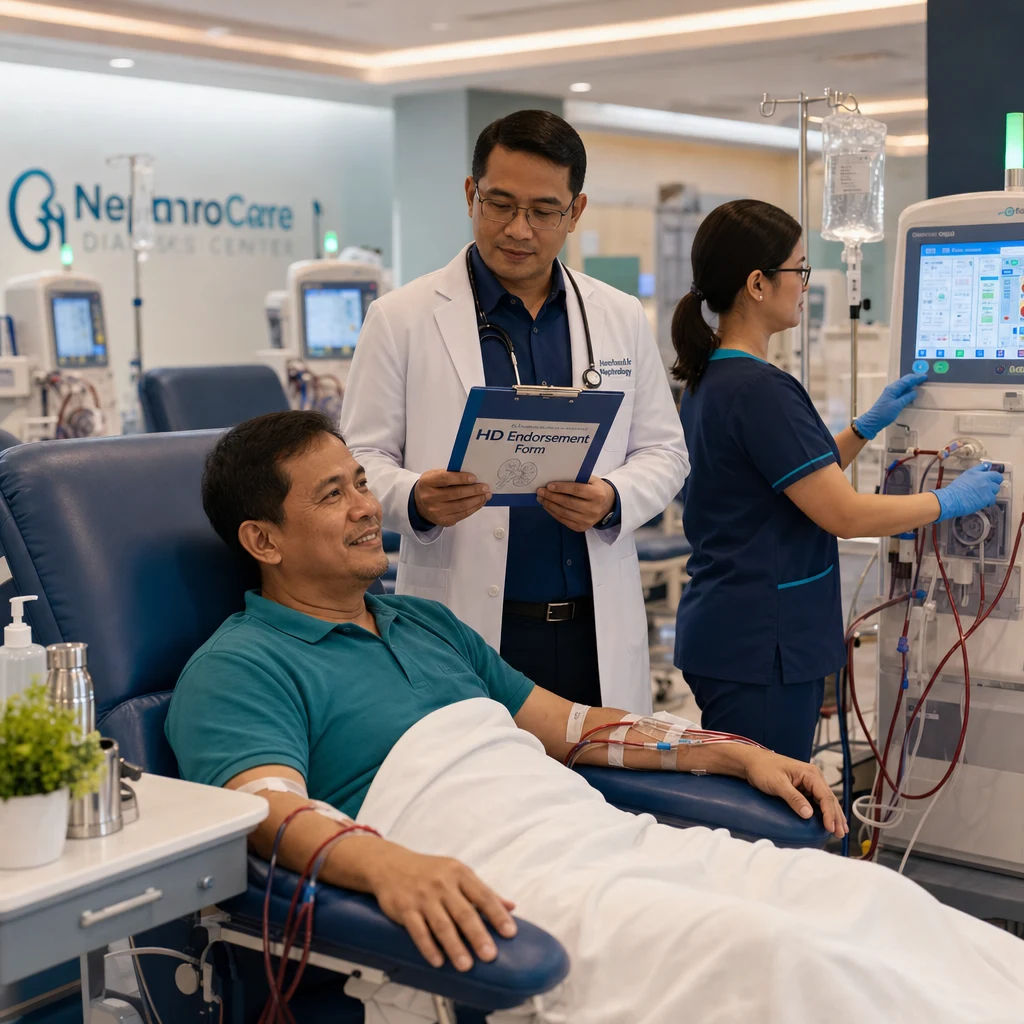 A planned, documented hemodialysis (HD) transfer ensures continuity of care — and protects your life. Filipino nephrologist teams coordinating a safe patient endorsement at a Philippine dialysis center.
What you are entitled to — and what you owe your team.Ano ang iyong karapatan — at ano ang iyong obligasyon sa iyong koponan.Unsa ang imong katungod — ug unsa ang imong obligasyon sa imong koponan.Nano ing iyong karapatan — at nano ing iyong obligasyon sa iyong koponan.
You Have the Right To:Mayroon Kang Karapatang:Adunay Kang Katungod Nga:Mayroon Kang Karapatang:
- Choose or change your physicianPumili o magpalit ng iyong doktorMopili o mopabag-o sa imong doktorPumili o magpalit ning iyong doktor
- Choose or change your dialysis facilityPumili o magpalit ng iyong dialysis facilityMopili o mopabag-o sa imong dialysis facilityPumili o magpalit ning iyong dialysis facility
- Request copies or summaries of your medical recordsHumiling ng mga kopya o buod ng iyong mga medikal na rekordMohangyo og mga kopya o buod sa imong mga medikal nga rekordHumiling ning mga kopya o buod ning iyong mga medikal a rekord
- Obtain a medical abstract or endorsementMakakuha ng medical abstract o endorsementMakakuha og medical abstract o endorsementMakakuha ning medical abstract o endorsement
- Receive respectful and non-coercive careMakatanggap ng magalang at hindi mapanganib na pag-aalagaMakadawat og marespeto ug dili mapugos nga pag-atimanMakatanggap ning magalang at hindi mapanganib a pag-aalaga
- Seek a second medical opinionHumingi ng pangalawang medikal na opinyonMangita og ikaduhang medikal nga opinyonHuminge ning pangalawang medikal a opinyon
- Maintain confidentiality of your recordsPanatilihing kumpidensyal ang iyong mga rekordIpadayon ang confidentiality sa imong mga rekordPanatilihing kumpidensyal ing iyong mga rekord
You Also Have Responsibilities:Mayroon Ka Ring mga Responsibilidad:Adunay Ka Usab nga mga Responsibilidad:Mayroon Ka Rin mga Responsibilidad:
- Inform your current team properly before leavingAbisuhan nang maayos ang iyong kasalukuyang koponan bago umalisPahibaloa sa husto ang imong kasamtangang koponan sa wala pa mopahawaAbisuhan nang maayos ing iyong kasalukuyang koponan bago umalis
- Provide accurate and complete medical informationMagbigay ng tumpak at kumpletong medikal na impormasyonMaghatag og tukma ug kumpleto nga medikal nga impormasyonMagbigay ning tumpak at kumpletong medikal a impormasyon
- Avoid skipping dialysis sessions during the transitionIwasang prumahan ang mga sesyon ng dialysis sa panahon ng transisyonLikayi ang paglaktaw sa mga sesyon sa dialysis sa panahon sa transisyonIwasan ing paglaktaw ning mga sesyon ning dialysis king panahon ning transisyon
- Cooperate with transfer documentation requirementsMakipagtulungan sa mga kinakailangan ng transfer documentationMakigtambayayong sa mga kinahanglanon sa transfer documentationMakipagtulungan king mga kinakailangan ning transfer documentation
- Respect the receiving center's scheduling and infection-control rulesIgalang ang mga patakaran ng receiving center sa scheduling at infection controlRespetohon ang mga patakaran sa receiving center bahin sa scheduling ug infection controlIgalang ing mga patakaran ning receiving center sa scheduling at infection control
Rights do not remove the need for proper process.Ang mga karapatan ay hindi nag-aalis ng pangangailangan para sa tamang proseso.Ang mga katungod dili magtangtang sa panginahanglan alang sa husto nga proseso.Ing mga karapatan ay hindi nag-aalis ning pangangailangan para king tamang proseso.
Having the right to transfer does not mean you can stop dialysis while waiting to transfer, or simply stop attending without telling anyone. Your safety depends on continuity — and continuity requires coordination.Ang pagkakaroon ng karapatang maglipat ay hindi nangangahulugang maaari kang huminto sa dialysis habang naghihintay na maglipat, o simpleng huminto sa pag-attend nang hindi sinasabihan ang sinuman. Ang iyong kaligtasan ay nakasalalay sa pagpapatuloy — at ang pagpapatuloy ay nangangailangan ng koordinasyon.Ang pagkaadunay sa katungod sa pagbalhin dili nagpasabut nga mahimo kang mohunong sa dialysis samtang naghulat sa pagbalhin, o simpleng mohunong sa pag-attend nga wala gipahibalo ang bisan kinsa. Ang imong kaluwasan nagsalalay sa pagpadayon — ug ang pagpadayon nanginahanglan og koordinasyon.Ing pagkakaroon ning karapatang maglipat ay hindi nangangahulugang malyari kang huminto sa dialysis habang naghihintay na maglipat, o simpleng huminto sa pag-attend nang hindi sinasabihan ing sinuman. Ing iyong kaligtasan ay nagsasalalay king pagpapatuloy — at ing pagpapatuloy ay nangangailangan ning koordinasyon.
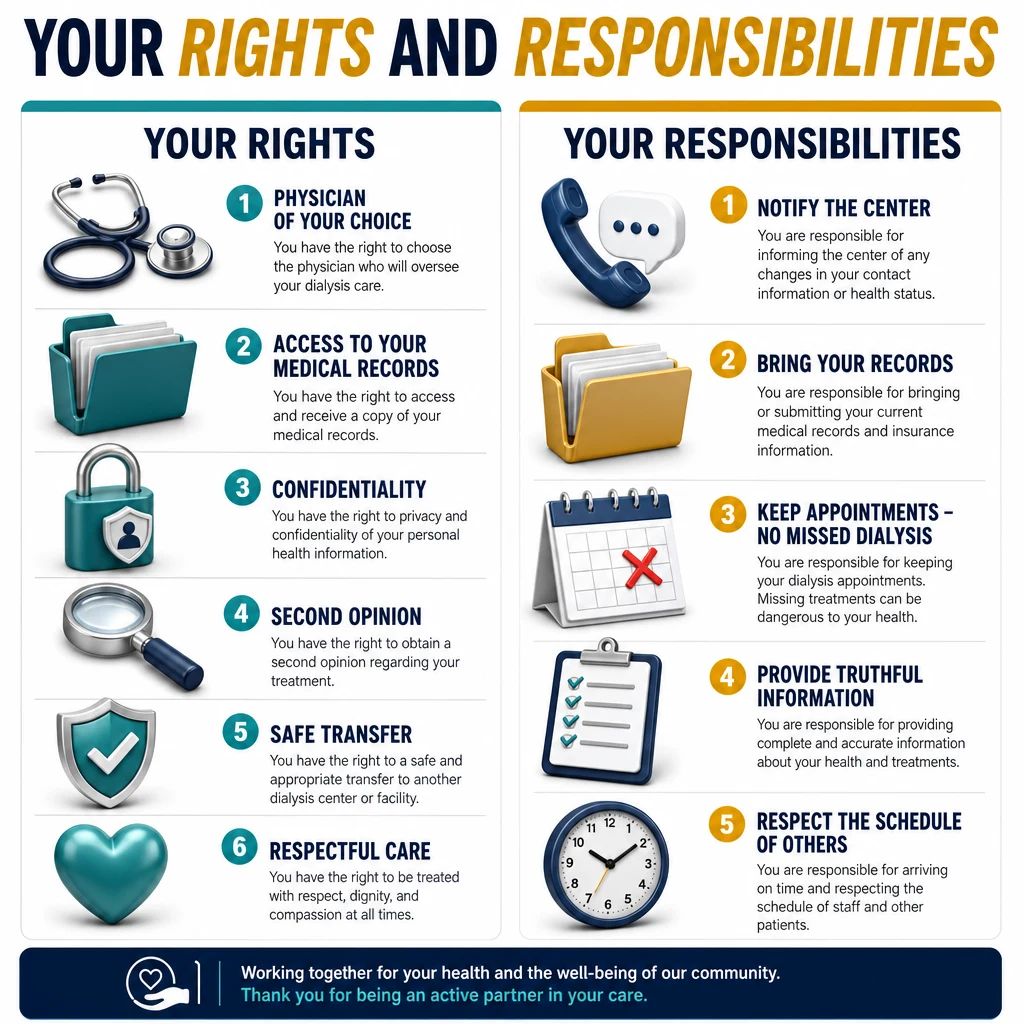 Your rights and responsibilities as a dialysis patient during an HD center transfer.
Why proper turnover is critical in hemodialysis.Bakit mahalaga ang tamang paglilipat sa hemodialysis.Nganong kritikal ang husto nga handover sa hemodialysis.Bakit mahalaga ing tamang paglilipat sa hemodialysis.
Unlike most medical situations, hemodialysis is highly individualized. Every patient has a unique prescription that has been fine-tuned over months or years. The receiving center cannot safely start your dialysis without this information.Hindi tulad ng karamihan sa mga medikal na sitwasyon, ang hemodialysis ay lubos na inidibidwalisado. Ang bawat pasyente ay may natatanging prescription na pinino sa loob ng mga buwan o taon. Ang receiving center ay hindi makakapagsimula nang ligtas ng iyong dialysis nang wala ang impormasyong ito.Dili sama sa kadaghanan sa mga medikal nga sitwasyon, ang hemodialysis lubos nga individualized. Ang matag pasyente adunay natatanging prescription nga gipino sulod sa mga bulan o tuig. Ang receiving center dili makapagsugod sa luwas sa imong dialysis nga wala niini nga impormasyon.Hindi tulad ning karamihan sa mga medikal a sitwasyon, ing hemodialysis ay lubos a inidibidwalisado. Ing bawat pasyente ay may natatanging prescription na pinino king loob ning mga bulan o taon. Ing receiving center ay hindi makakapagsimula nang ligtas ning iyong dialysis nang wala ing impormasyong iti.
What the receiving center must know about youAno ang dapat malaman ng receiving center tungkol sa iyoUnsa ang kinahanglan mahibaw-i sa receiving center mahitungod kanimoNano ing dapat maalaman ning receiving center tungkol sa iyo
🩺 Your PrescriptionAng Iyong PrescriptionAng Imong PrescriptionIng Iyong Prescription
- Dry weightDry weightDry weightDry weight
- Dialyzer type and reuse protocolUri ng dialyzer at reuse protocolKlase sa dialyzer ug reuse protocolUri ning dialyzer at reuse protocol
- Blood flow and dialysate flow rateBlood flow at dialysate flow rateBlood flow ug dialysate flow rateBlood flow at dialysate flow rate
- Dialysate bath compositionKomposisyon ng dialysate bathKomposisyon sa dialysate bathKomposisyon ning dialysate bath
- Heparin or heparin-free protocolHeparin o heparin-free protocolHeparin o heparin-free protocolHeparin o heparin-free protocol
- Session frequency and durationDalas at tagal ng sesyonKasagaran ug tagal sa sesyonDalas at tagal ning sesyon
💊 Your Medical ProfileAng Iyong Medikal na ProfileAng Imong Medikal nga ProfileIng Iyong Medikal a Profile
- Blood pressure tendenciesMga tendensya ng blood pressureMga tendensya sa blood pressureMga tendensya ning blood pressure
- Ultrafiltration toleranceUltrafiltration toleranceUltrafiltration toleranceUltrafiltration tolerance
- ESA (erythropoietin) and iron dosingESA (erythropoietin) at iron dosingESA (erythropoietin) ug iron dosingESA (erythropoietin) at iron dosing
- Current medicationsKasalukuyang mga gamotKasamtangang mga gamotKasalukuyang mga gamut
- AllergiesMga allergyMga allergyMga allergy
- Recent hospitalizationsKamakailang mga hospitalisasyonBag-ong mga hospitalisasyonKamakaailang mga hospitalisasyon
🔬 Infection & AccessImpeksyon at AccessImpeksyon ug AccessImpeksyon at Access
- Hepatitis B and C statusKatayuan ng Hepatitis B at CStatus sa Hepatitis B ug CKatayuan ning Hepatitis B at C
- Vascular access type and historyUri at kasaysayan ng vascular accessKlase ug kasaysayan sa vascular accessUri at kasaysayan ning vascular access
- Known access problemsMga kilalang problema sa accessMga nahibaw-ang problema sa accessMga kilalang problema sa access
- Recent complicationsKamakailang mga komplikasyonBag-ong mga komplikasyonKamakaailang mga komplikasyon
- PhilHealth (Philippine Health Insurance Corporation) utilization statusKatayuan ng paggamit ng PhilHealthStatus sa paggamit sa PhilHealthKatayuan ning paggamit ning PhilHealth
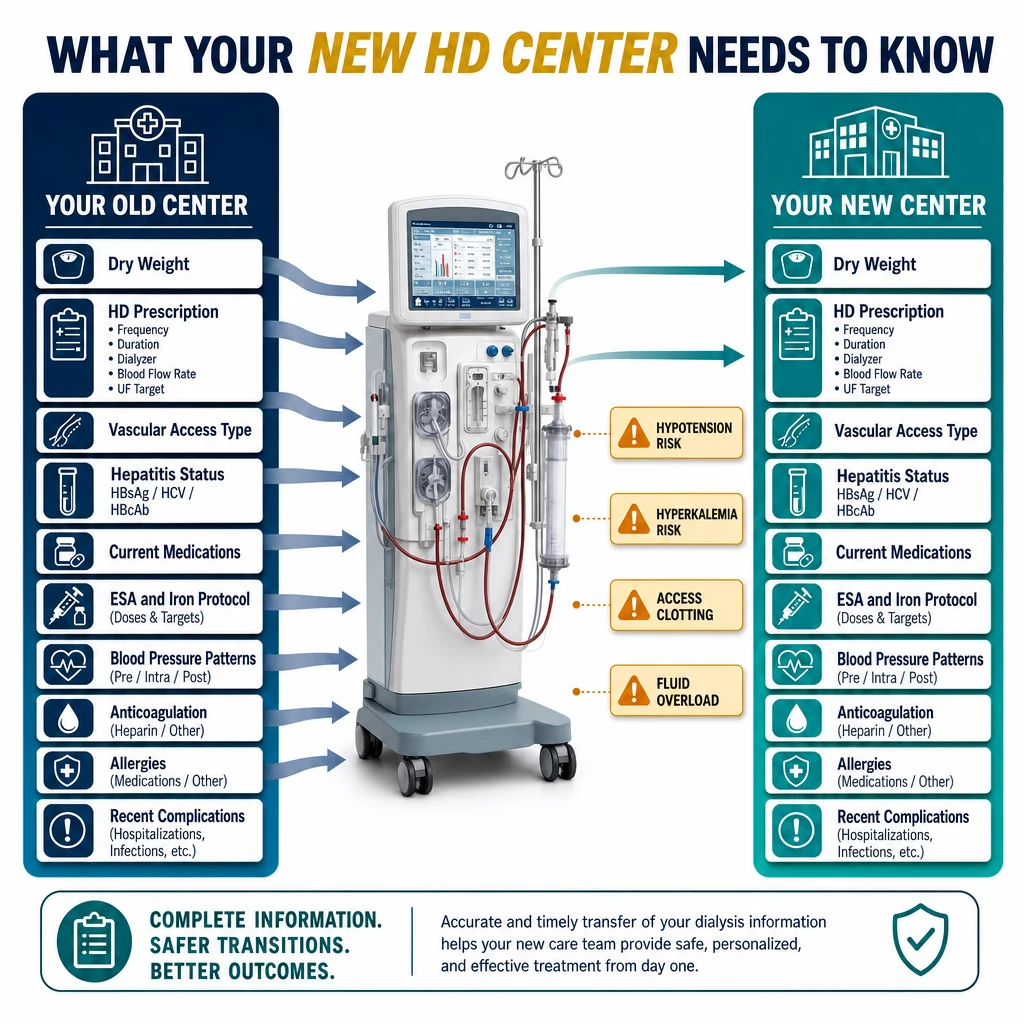 Everything the receiving HD center must receive before your first session there — from dry weight to hepatitis status.
Risks of a poor or abrupt transferMga panganib ng masamang o abrupto na paglilipatMga peligro sa dili maayo o abrupto nga pagbalhinMga panganib ning masamang o abrupto a paglilipat
Immediate risksMga agarang panganibMga dayon nga peligroMga agarang panganib
- Missed dialysis sessionNapalampas na sesyon ng dialysisNasayop nga sesyon sa dialysisNapalampas a sesyon ning dialysis
- Severe fluid overloadMatinding fluid overloadGrabe nga fluid overloadMatinding fluid overload
- Hyperkalemia (dangerously high potassium)Hyperkalemia (mapanganib na mataas na potassium)Hyperkalemia (delikadong taas nga potassium)Hyperkalemia (mapanganib a mataas a potassium)
- Hypotension from wrong prescriptionHypotension mula sa maling prescriptionHypotension gikan sa sayop nga prescriptionHypotension mula sa maling prescription
- Access thrombosis from inadequate anticoagulationAccess thrombosis mula sa hindi sapat na anticoagulationAccess thrombosis gikan sa dili igo nga anticoagulationAccess thrombosis mula sa hindi sapat a anticoagulation
Delayed or systemic risksMga naantala o sistematikong panganibMga nalangan o sistematikong peligroMga naantala o sistematikong panganib
- Wrong dialysis settings at receiving centerMaling dialysis settings sa receiving centerSayop nga dialysis settings sa receiving centerMaling dialysis settings sa receiving center
- Medication interruptionPagkaantala ng gamotPagkaputol sa gamotPagkaantala ning gamut
- Infection-control breachesPaglabag sa infection controlPaglabag sa infection controlPaglabag sa infection control
- Delayed emergency managementNaantalang emergency managementNalangag emergency managementNaantalang emergency management
- PhilHealth billing gaps or duplicate claimsMga agwat sa PhilHealth billing o duplicate claimsMga gap sa PhilHealth billing o duplicate claimsMga agwat sa PhilHealth billing o duplicate claims
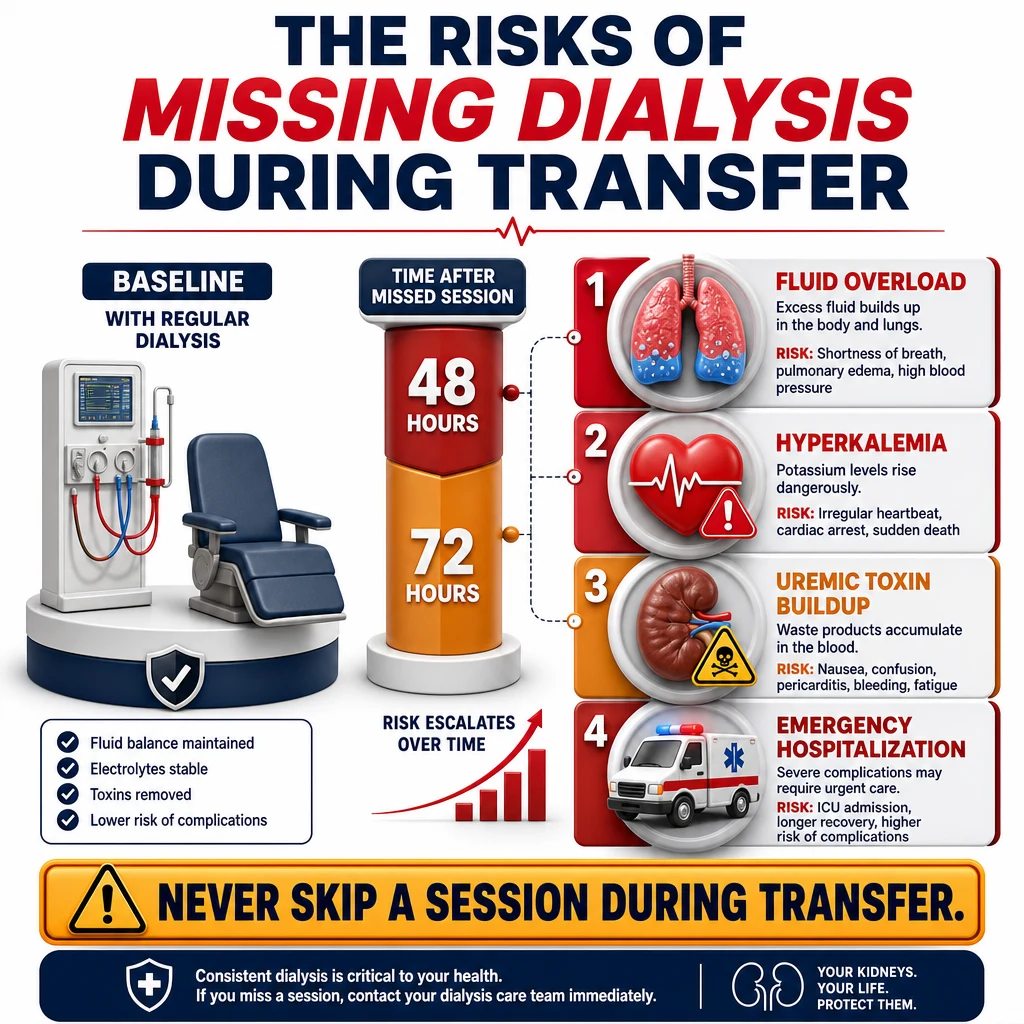 The consequences of missed dialysis accumulate rapidly — fluid overload, hyperkalemia, and cardiac risk can develop within 48–72 hours of a skipped session.
The PSN Hemodialysis Patient's Endorsement Form (HPEF).Ang PSN Hemodialysis Patient's Endorsement Form (HPEF).Ang PSN Hemodialysis Patient's Endorsement Form (HPEF).Ing PSN Hemodialysis Patient's Endorsement Form (HPEF).
The Philippine Society of Nephrology (PSN) officially recommends use of the Hemodialysis Patient's Endorsement Form (HPEF) for all patient transfers between HD centers, temporary dialysis arrangements, changes of nephrologist, and travel dialysis. This form is the standard document for safe medical turnover in the Philippines.Ang Philippine Society of Nephrology (PSN) ay opisyal na inirerekomenda ang paggamit ng Hemodialysis Patient's Endorsement Form (HPEF) para sa lahat ng paglilipat ng pasyente sa pagitan ng mga HD center, pansamantalang dialysis, pagpapalit ng nephrologist, at travel dialysis. Ang form na ito ang karaniwang dokumento para sa ligtas na medikal na paglilipat sa Pilipinas.Ang Philippine Society of Nephrology (PSN) opisyal nga girekomendar ang paggamit sa Hemodialysis Patient's Endorsement Form (HPEF) alang sa tanan nga pagbalhin sa pasyente tali sa mga HD center, temporaryong dialysis, pagbag-o sa nephrologist, ug travel dialysis. Kini nga form ang sumbanan nga dokumento alang sa luwas nga medikal nga handover sa Pilipinas.Ing Philippine Society of Nephrology (PSN) ay opisyal na inirerekomenda ing paggamit ning Hemodialysis Patient's Endorsement Form (HPEF) para sa lahat ning paglilipat ning pasyente sa pagitan ning mga HD center, pansamantalang dialysis, pagpapalit ning nephrologist, at travel dialysis. Ing form na iti ing karaniwang dokumento para king ligtas a medikal a paglilipat sa Pilipinas.
PSN Hemodialysis Patient's Endorsement Form (HPEF)
The official transfer document recommended by the Philippine Society of Nephrology. Use this form whenever transferring between HD centers, changing nephrologists, or arranging temporary dialysis while traveling.Ang opisyal na transfer document na inirerekomenda ng Philippine Society of Nephrology. Gamitin ang form na ito tuwing maglilipat sa pagitan ng mga HD center, magpapalit ng nephrologist, o mag-aayos ng pansamantalang dialysis habang naglalakbay.Ang opisyal nga transfer document nga girekomendar sa Philippine Society of Nephrology. Gamiton kini nga form sa matag pagbalhin tali sa mga HD center, pagbag-o sa nephrologist, o pag-arrange og temporaryong dialysis samtang nagbiyahe.Ing opisyal a transfer document na inirerekomenda ning Philippine Society of Nephrology. Gamitin ing form na iti tuwing maglilipat sa pagitan ning mga HD center, magpapalit ning nephrologist, o mag-aayos ning pansamantalang dialysis habang naglalakbay.
A fillable PDF copy of the form is available for download. Bring it to your current nephrologist and ask them to complete it before your transfer.Isang fillable PDF na kopya ng form ay available para i-download. Dalhin ito sa iyong kasalukuyang nephrologist at hilingin sa kanila na kumpletuhin bago ang iyong paglilipat.Usa ka fillable PDF nga kopya sa form available para i-download. Dad-on kini sa imong kasamtangang nephrologist ug pangayoa nga kumpletuhin sa wala pa ang imong pagbalhin.Metung a fillable PDF a kopya ning form ay available para i-download. Dalhin iti sa iyong kasalukuyang nephrologist at hingin la na kumpletuhin bago ing iyong paglilipat.
Download PSN Endorsement Form (PDF)I-download ang PSN Endorsement Form (PDF)I-download ang PSN Endorsement Form (PDF)I-download ing PSN Endorsement Form (PDF)What the PSN Endorsement Form coversAno ang saklaw ng PSN Endorsement FormUnsa ang gisangkap sa PSN Endorsement FormNano ing saklaw ning PSN Endorsement Form
The form is comprehensive and structured to communicate everything the receiving center and nephrologist need. It is organized into the following sections:Ang form ay komprehensibo at nakaayos upang maiparating ang lahat ng kailangan ng receiving center at nephrologist. Ito ay nakaayos sa mga sumusunod na seksyon:Ang form komprehensibo ug nastruktura sa pagpaabot sa tanan nga gikinahanglan sa receiving center ug nephrologist. Kini giorganisar sa mosunod nga mga seksyon:Ing form ay komprehensibo at nakaayos upang maiparating ing lahat ning kailangan ning receiving center at nephrologist. Iti ay nakaayos king mga sumusunod a seksyon:
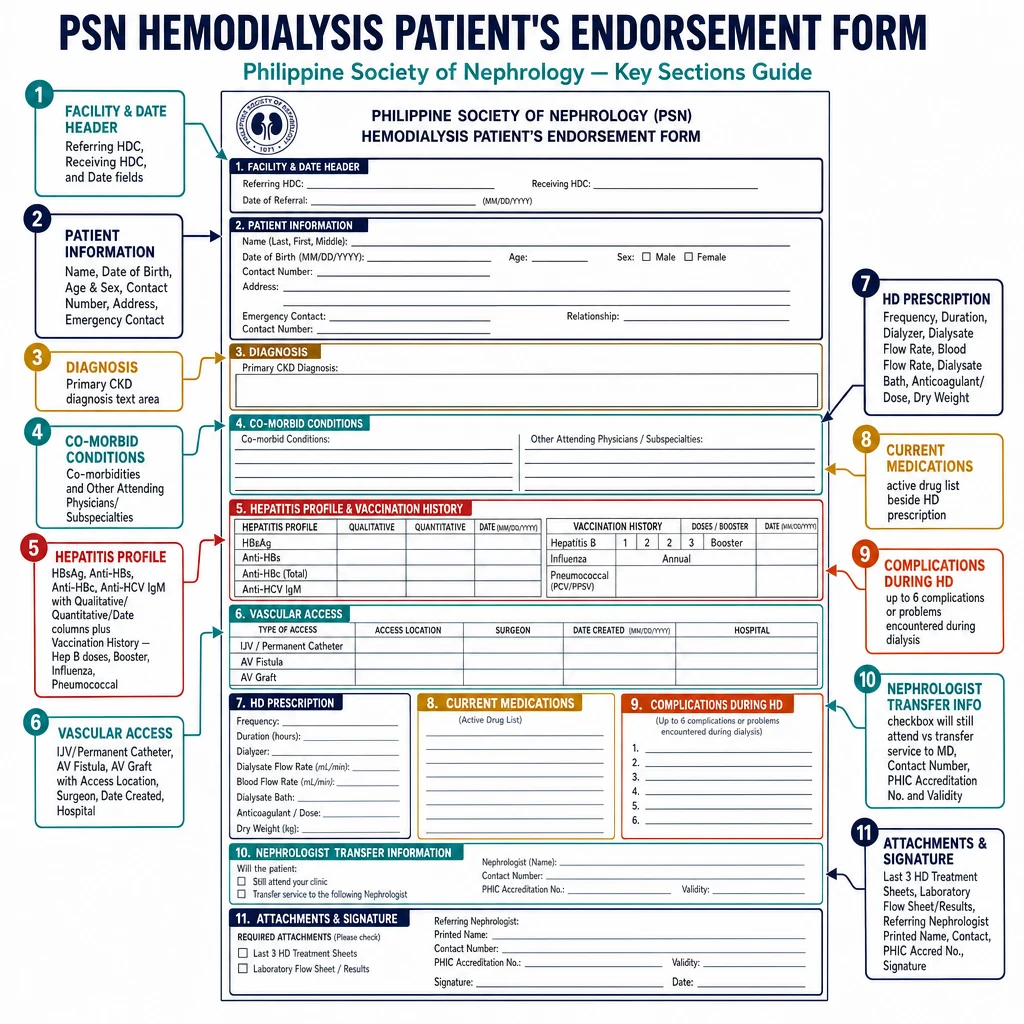 The PSN Hemodialysis Patient's Endorsement Form — 11 key sections labeled and explained. Bring this to your nephrologist to complete before your transfer.Ang PSN Hemodialysis Patient's Endorsement Form — 11 pangunahing seksyon na may label at paliwanag. Dalhin ito sa iyong nephrologist para kumpletuhin bago ang iyong paglipat.Ang PSN Hemodialysis Patient's Endorsement Form — 11 ka nag-unang seksyon nga may label ug katin-awan. Dad-a kini sa imong nephrologist aron mahuman sa wala pa ang imong transfer.Ing PSN Hemodialysis Patient's Endorsement Form — 11 pangunahing seksyon na adwang label at paliwanag. Dalhin iti king iyung nephrologist para kumpletuhin bago king iyung paglipat.
Patient InformationImpormasyon ng PasyenteImpormasyon sa PasyenteImpormasyon ning Pasyente
- Full nameBuong pangalanTibuok ngalanBuong lagyu
- Date of birthPetsa ng kapanganakanPetsa sa pagkatawoPetsa ning kapanganakan
- Address and contact detailsAddress at impormasyon sa pakikipag-ugnayanAdres ug impormasyon sa kontakAddress at impormasyon keng pakikipag-ugnayan
- Emergency contactKontakin sa emerhensyaKontak sa emerhensyaKontak keng emerhensya
Medical InformationImpormasyong MedikalMedikal nga ImpormasyonMedikal nga Impormasyon
- Primary diagnosisPangunahing diagnosisNag-unang diagnosisPangunahing diagnosis
- Comorbid conditionsMga kasamang sakitMga kauban nga kondisyonMga kasamang sakit
- Other attending physiciansIba pang mga doktorUbang mga attending physicianAliwang mga doktor
Infection ControlKontrol sa ImpeksyonKontrol sa ImpeksyonKontrol keng Impeksyon
- HBsAg statusKatayuan ng HBsAgStatus sa HBsAgKatayuan ning HBsAg
- Anti-HBs statusKatayuan ng Anti-HBsStatus sa Anti-HBsKatayuan ning Anti-HBs
- Anti-HCV (hepatitis C virus) statusKatayuan ng Anti-HCVStatus sa Anti-HCVKatayuan ning Anti-HCV
- Hepatitis vaccination historyKasaysayan ng bakuna sa hepatitisKasaysayan sa bakuna batok hepatitisKasaysayan ning bakuna keng hepatitis
Vascular AccessVascular AccessVascular AccessVascular Access
- AV fistula / graft / catheter typeUri ng AV fistula / graft / catheterKlase sa AV fistula / graft / catheterKlase ning AV fistula / graft / catheter
- Access locationLokasyon ng accessLokasyon sa accessLokasyon ning access
- Date createdPetsa ng paglikhaPetsa sa paghimoPetsa ning paggawa
- Surgeon and hospitalSiruhano at ospitalSiruhano ug ospitalSiruhano at ospital
Dialysis PrescriptionReseta ng DialysisPrescription sa DialysisReseta ning Dialysis
- Frequency and durationDalas at tagalPila ka beses ug gidugayonPasilalim at tagal
- Dialyzer and blood flow rateDialyzer at bilis ng daloy ng dugoDialyzer ug blood flow rateDialyzer at bilis ning daloy ning daga
- Dialysate bath and flowDialysate bath at daloyDialysate bath ug flowDialysate bath at daloy
- Anticoagulation and dry weightAnticoagulation at tuyong timbangAnticoagulation ug dry weightAnticoagulation at tuyung timbang
Current MedicationsKasalukuyang mga GamotKaron nga mga TambalKasalukuyang mga Gamot
- ESA and ironESA at bakalESA ug ironESA at iron
- AntihypertensivesGamot sa presyonGamot batok presyonGamot keng presyon
- Phosphate bindersPhosphate bindersPhosphate bindersPhosphate binders
- Anticoagulants and othersAnticoagulants at iba paAnticoagulants ug uban paAnticoagulants at aliwang gamot
Complications HistoryKasaysayan ng mga KomplikasyonKasaysayan sa mga KomplikasyonKasaysayan ning mga Komplikasyon
- Intradialytic hypotensionIntradialytic hypotensionIntradialytic hypotensionIntradialytic hypotension
- Severe cramps or clottingMatinding pulikat o pamumuo ng dugoGrabe nga pulikat o pagkimbot sa dugoMaragul a pulikat o pamumuo ning daga
- ArrhythmiasArrhythmiasArrhythmiasArrhythmias
- Poor ultrafiltration toleranceMahirap tiisin ang ultrafiltrationLisod ang pagtolera sa ultrafiltrationMahirap tiisin ing ultrafiltration
Required AttachmentsMga Kinakailangang KalakipMga Gikinahanglan nga KalakipMga Kinakailangang Kalakip
- Last 3 dialysis treatment sheetsHuling 3 treatment sheets ng dialysisKatapusang 3 treatment sheets sa dialysisKatapusang 3 treatment sheets ning dialysis
- Latest laboratory flow sheetPinakabagong laboratory flow sheetPinakabag-o nga laboratory flow sheetPinakabagung laboratory flow sheet
- Recent laboratory resultsMga kamakailanang resulta sa laboratoryoBag-o nga mga resulta sa laboratoryoBag-ung mga resulta keng laboratoryo
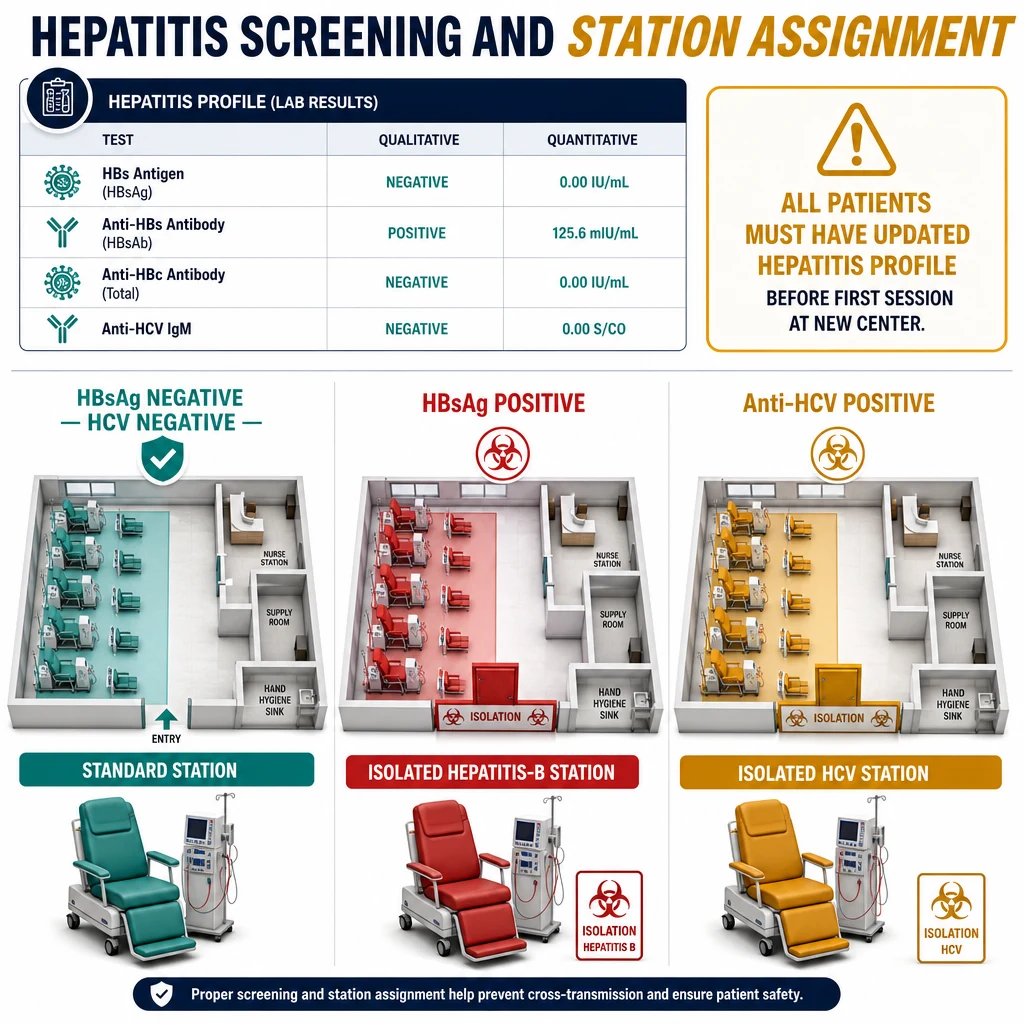 Hepatitis B and C screening — required on the endorsement form — determines your station assignment at the new center.Ang pagsusuri para sa Hepatitis B at C — kinakailangan sa endorsement form — ang nagtatakda ng iyong istasyon sa bagong sentro.Ang screening sa Hepatitis B ug C — gikinahanglan sa endorsement form — nagtino sa imong station assignment sa bag-ong sentro.Ing pagsusuri para keng Hepatitis B at C — kailangan king endorsement form — ing nagtatakda ning iyung station assignment king bagung sentro.
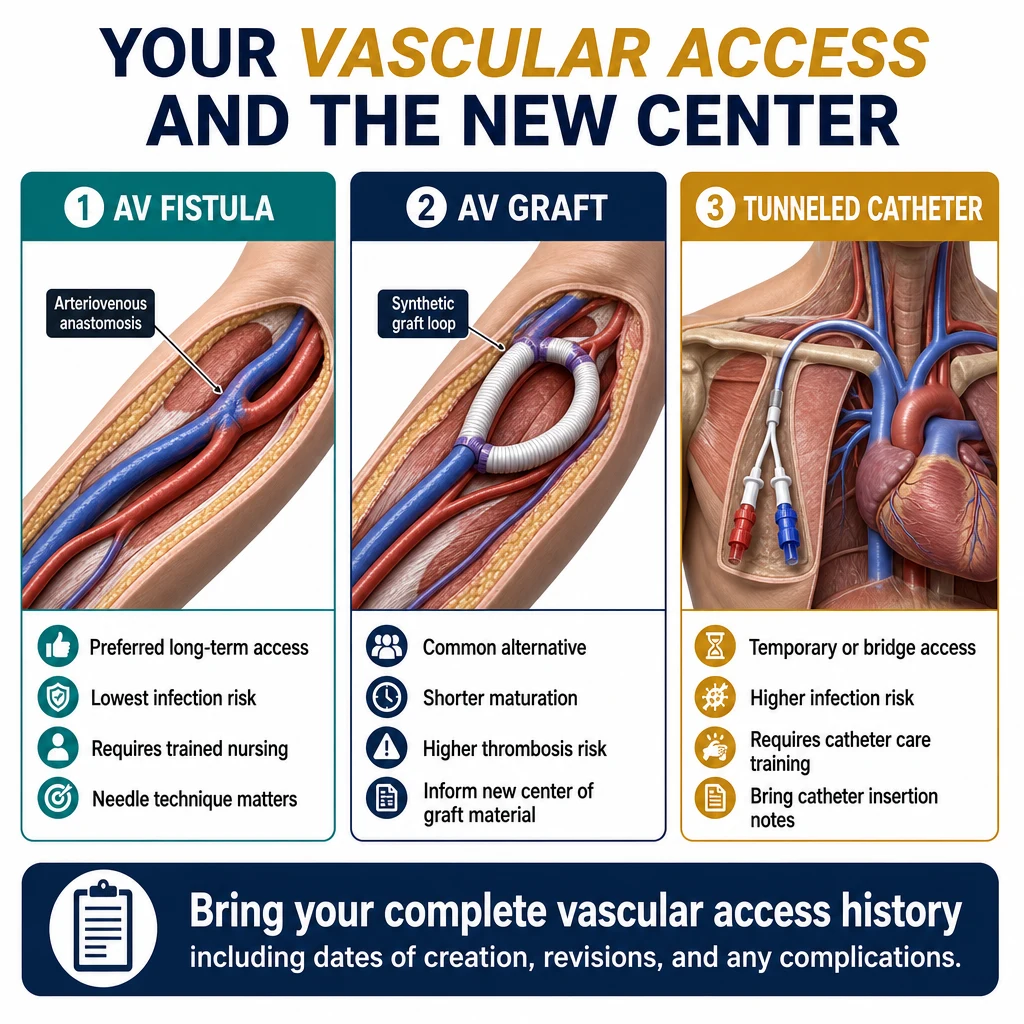 Your vascular access type — AV fistula, AV graft, or tunneled catheter — must be documented and communicated to the receiving center.Ang uri ng iyong vascular access — AV fistula, AV graft, o tunneled catheter — dapat idokumento at ipaalam sa tatanggap na sentro.Ang klase sa imong vascular access — AV fistula, AV graft, o tunneled catheter — kinahanglan idokumento ug ipahibalo sa receiving center.Ing klase ning iyung vascular access — AV fistula, AV graft, o tunneled catheter — kailangan idokumento at ipaalam king receiving center.
ReferenceSanggunianReperensyaSanggunian
Based on: PSN HD Guidelines 3rd Edition 2024 and the official PSN Hemodialysis Patient's Endorsement Form. Visit psn.org.ph for the latest guidelines.Batay sa: PSN HD Guidelines 3rd Edition 2024 at ang opisyal na PSN Hemodialysis Patient's Endorsement Form. Bisitahin ang psn.org.ph para sa pinakabagong mga alituntunin.Gibase sa: PSN HD Guidelines 3rd Edition 2024 ug ang opisyal nga PSN Hemodialysis Patient's Endorsement Form. Bisitaha ang psn.org.ph para sa pinakabag-o nga mga guidelines.Batay king: PSN HD Guidelines 3rd Edition 2024 at ing opisyal na PSN Hemodialysis Patient's Endorsement Form. Bisitahin ing psn.org.ph para king pinakabagung mga alituntunin.
How to transfer HD centers: the five steps.Paano maglipat ng HD center: ang limang hakbang.Unsaon sa pagbalhin sa HD center: ang lima ka lakang.Pauno maglipat ning HD center: ing limang hakbang.
Follow these five steps in order. Do not skip to step 2 before completing step 1 — the most common mistake is informing your current center before confirming a slot at your new center.Sundin ang limang hakbang na ito nang sunud-sunod. Huwag lumaktaw sa hakbang 2 bago makumpleto ang hakbang 1 — ang pinakakaraniwang pagkakamali ay ang pagpapaalam sa iyong kasalukuyang sentro bago makumpirma ang slot sa bagong sentro.Sundon kini nga lima ka lakang sa husto nga pagkasunod. Ayaw prusigiha ang lakang 2 nga wala pa mahuman ang lakang 1 — ang labing kasagarang sayop mao ang pagpahibalo sa imong karon nga sentro sa wala pa makumpirma ang slot sa bag-ong sentro.Sundin ining limang hakbang nang sunud-sunod. E prusigiha ing hakbang 2 bago makumpleto ing hakbang 1 — ing pinaka-karaniwang pagkakamali e ipaalam king iyung kasalukuyang sentro bago makumpirma ing slot king bagung sentro.
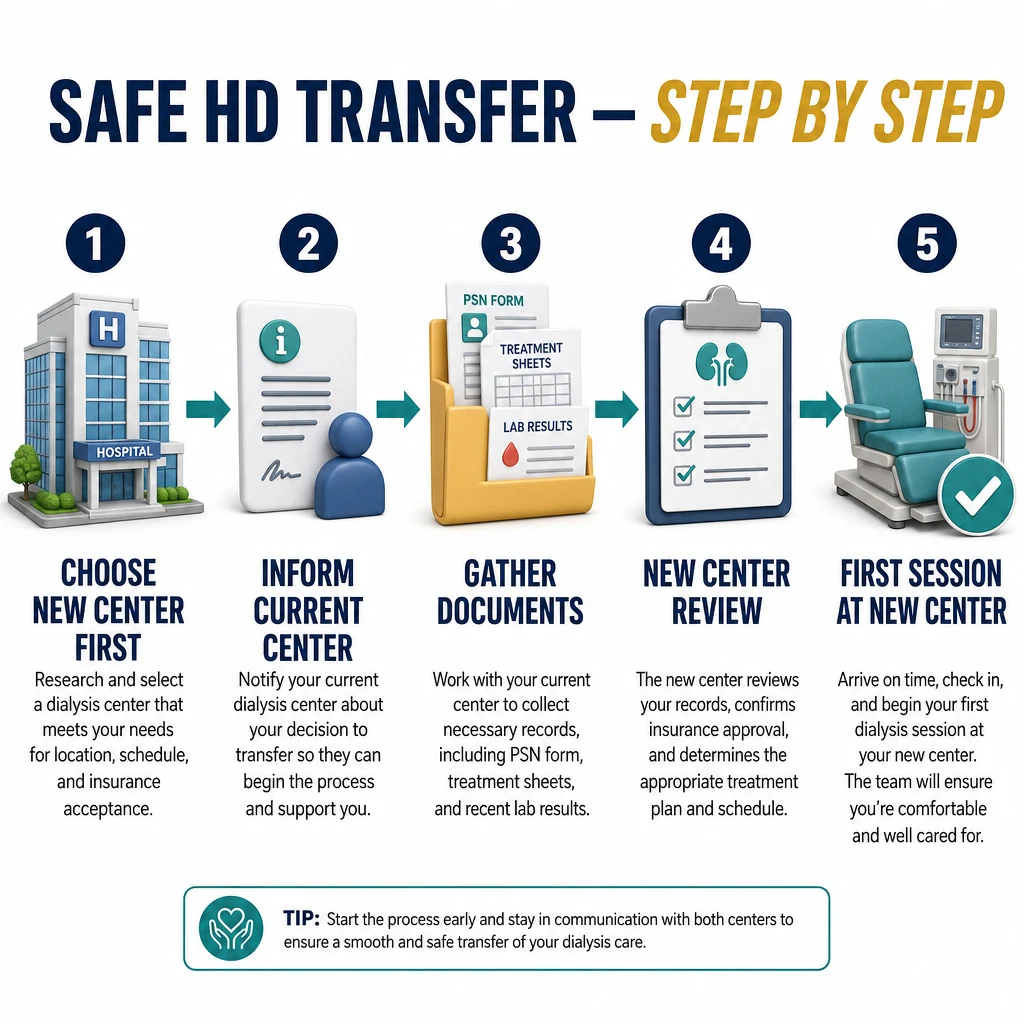 The five steps to a safe HD transfer — in order. Never skip a step or reverse the sequence.Ang limang hakbang para sa ligtas na paglipat ng HD — sa tamang pagkakasunod. Huwag nilang laktawan o baguhin ang pagkakasunod.Ang lima ka lakang alang sa luwas nga HD transfer — sa husto nga pagkasunod. Ayaw gayud prilihi o balihon ang pagkasunod.Ing limang hakbang para king ligtas na HD transfer — king tamang pagkakasunod. E laktawan o baguhin ing pagkakasunod.
Choose the receiving HD center first.Piliin muna ang tatanggap na HD center.Pagpili una sa receiving HD center.Piliin nung maona ing tatanggap na HD center.
Before you say anything to your current center, confirm that the new center can actually accept you. Many centers have waitlists or specific requirements.Bago sabihin ang kahit ano sa iyong kasalukuyang sentro, kumpirmahin na ang bagong sentro ay talagang makakatanggap sa iyo. Maraming sentro ang may waitlist o mga tiyak na kinakailangan.Sa wala ka pa magsulti bisan unsa sa imong karon nga sentro, kumpirmaha nga ang bag-ong sentro makadawat gayud kanimo. Daghan mga sentro ang adunay waitlist o espesipiko nga mga kinakailangan.Bago magsalita keng iyung kasalukuyang sentro, kumpirmahin na ing bagung sentro makakatanggap kanimo. Maranung sentro ing adwang waitlist o tiyak na mga kinakailangan.
Confirm with the receiving center:Kumpirmahin sa tatanggap na sentro:Kumpirmaha sa receiving center:Kumpirmahin king tatanggap na sentro:
- Available slot and schedule that matches your current frequencyAvailable na slot at iskedyul na tugma sa iyong kasalukuyang dalasAvailable nga slot ug iskedyul nga katugma sa imong karon nga frequencyAvailable na slot at iskedyul na akmang king iyung kasalukuyang dalas
- Acceptance by a nephrologist at that centerPagtanggap ng isang nephrologist sa sentrong iyonPagdawat sa usa ka nephrologist sa maong sentroPagtanggap ning metung a nephrologist king manung sentro
- PhilHealth accreditation (for Z-Benefit coverage)Akreditasyon sa PhilHealth (para sa saklaw ng Z-Benefit)Akreditasyon sa PhilHealth (para sa Z-Benefit coverage)Akreditasyon keng PhilHealth (para king Z-Benefit coverage)
- Ability to handle your specific conditionKakayahang hawakan ang iyong tiyak na kondisyonKakayahan sa pag-atubang sa imong espesipiko nga kondisyonKakayahan na hawakan ing iyung tiyak na kondisyon
Verify they can manage your situation if you have:Tiyakin na kaya nilang hawakan ang iyong sitwasyon kung ikaw ay may:Pamatud-i nga kaya nila atubangon ang imong sitwasyon kung ikaw adunay:Tiyakin na kaya yang hawakan ing iyung sitwasyon king ika ay adwang:
- Tunneled catheter dialysisTunneled catheter dialysisTunneled catheter dialysisTunneled catheter dialysis
- AV fistula complications or a recently revised fistulaMga komplikasyon ng AV fistula o kamakailan na binagong fistulaMga komplikasyon sa AV fistula o bag-o lang nga gibag-o nga fistulaMga komplikasyon ning AV fistula o kamakailan binaguhing fistula
- Hepatitis B positive status (requires a dedicated machine or station)Positibong Hepatitis B (nangangailangan ng nakatuong makina o istasyon)Positibo sa Hepatitis B (nanginahanglan og dedikadong makina o estasyon)Positibung Hepatitis B (kailangan ning dedikadong makina o estasyon)
- High-risk cardiovascular profile or frequent intradialytic hypotensionMataas na panganib na cardiovascular o madalas na intradialytic hypotensionHigh-risk nga cardiovascular o kanunay nga intradialytic hypotensionHigh-risk na cardiovascular o madalas na intradialytic hypotension
- Heparin-free dialysis requirementPangangailangan ng dialysis na walang heparinKinahanglan sa dialysis nga walay heparinKailangan ning dialysis nga e heparin
- Elderly or frail status requiring closer monitoringKatandaan o kahinaan na nangangailangan ng mas maingat na pagmamatyagTigulang o maluya nga kahimtang nga nanginahanglan og mas suod nga pagmonitorKatandaan o kahinaan na kailangan ning mas malapit na pagmamatyag
Inform your current HD center and nephrologist.Ipaalam sa iyong kasalukuyang HD center at nephrologist.Ipahibalo sa imong karon nga HD center ug nephrologist.Ipaalam king iyung kasalukuyang HD center at nephrologist.
Once you have a confirmed slot at the receiving center, inform your current team. Ideally, give them at least 1–2 weeks' notice for non-emergency transfers.Kapag may nakumpirmang slot ka na sa tatanggap na sentro, ipaalam sa iyong kasalukuyang koponan. Kung maaari, bigyan sila ng hindi bababa sa 1–2 linggong abiso para sa mga hindi emergency na paglipat.Kung aduna na kang nakumpirmang slot sa receiving center, ipahibalo sa imong karon nga team. Sa maayo, hatagi sila og labing menos 1–2 ka semana nga abiso para sa dili emergency nga transfer.Kapag adwa na kang nakumpirmang slot king tatanggap na sentro, ipaalam king iyung kasalukuyang koponan. Kung maaari, bigyan la ning hindi bababa sa 1–2 linggung abiso para king mga e emergency na paglipat.
Request the following at this point:Humiling ng mga sumusunod sa puntong ito:Pangayo sa mosunod sa kini nga panahon:Huminge ning mosunod king puntung iti:
- Medical abstractMedical abstractMedical abstractMedical abstract
- PSN Hemodialysis Patient's Endorsement Form (completed and signed)PSN Hemodialysis Patient's Endorsement Form (kumpleto at napirmahan)PSN Hemodialysis Patient's Endorsement Form (kompleto ug napirmahan)PSN Hemodialysis Patient's Endorsement Form (kumpleto at napirmahan)
- Dialysis records and last 3 treatment sheetsMga rekord ng dialysis at huling 3 treatment sheetsMga rekord sa dialysis ug katapusang 3 treatment sheetsMga rekord ning dialysis at katapusang 3 treatment sheets
- Latest laboratory resultsPinakabagong mga resulta sa laboratoryoPinakabag-o nga mga resulta sa laboratoryoPinakabagung mga resulta keng laboratoryo
Do not "disappear" from your current center.Huwag "mawala" mula sa iyong kasalukuyang sentro.Ayaw "mawala" gikan sa imong karon nga sentro.E "mawala" king iyung kasalukuyang sentro.
Abruptly stopping without notice is the single most dangerous transfer behavior. It leaves your current team unable to track your status, and leaves the receiving center without your records. It also makes it harder to obtain proper endorsement documents later.Ang biglang paghinto nang walang abiso ang pinaka-mapanganib na gawi sa paglipat. Iniiwan nito ang iyong kasalukuyang koponan na hindi masusubaybayan ang iyong katayuan, at iniiwan ang tatanggap na sentro nang wala ang iyong mga rekord. Ginagawa rin nitong mas mahirap na makakuha ng tamang mga dokumento ng endorsement sa ibang pagkakataon.Ang kalit nga paghunong nga walay abiso ang pinakauy-oy nga transfer nga kinaiya. Gibiyaan niini ang imong karon nga team nga dili masubay ang imong kahimtang, ug gibiyaan ang receiving center nga walay imong mga rekord. Gipasamok usab niini ang pagkuha og husto nga mga endorsement documents sa ulahi.Ing biglang paghunong nang e abiso ing pinaka-mapanganib na gawi king paglipat. Iniiwanan nitong iyung kasalukuyang koponan na e masusubaybayan ing iyung katayuan, at iniiwan ing tatanggap na sentro nang wala ring iyung mga rekord. Pinahirapan pa niti ing pagkuha ning tamang mga dokumento ning endorsement mamaya.
Prepare your complete transfer documents.Ihanda ang iyong kumpletong mga dokumento sa paglipat.Pag-andam sa imong kumpleto nga mga dokumento sa transfer.Ihanda ing iyung kumpletong mga dokumento ning paglipat.
Gather everything on this list before your first session at the receiving center. Missing documents — especially the endorsement form and recent labs — may delay your acceptance or result in incorrect initial dialysis settings.Tipunin ang lahat ng nasa listahang ito bago ang iyong unang sesyon sa tatanggap na sentro. Ang mga nawawalang dokumento — lalo na ang endorsement form at kamakailanang mga lab — maaaring makapagantala sa iyong pagtanggap o magresulta sa maling unang mga setting ng dialysis.Tipunon ang tanan sa listahan sa wala pa ang imong unang sesyon sa receiving center. Ang mga kulang nga dokumento — labi na ang endorsement form ug bag-o lang nga mga lab — mahimong makapalangan sa imong pagdawat o makaresulta sa maling unang mga setting sa dialysis.Tipunin ing lahat ning adwang king listahang iti bago king iyung unang sesyon king tatanggap na sentro. Ing mga nawawalang dokumento — lalu na ing endorsement form at bag-ung mga lab — maaaring makapag-antala king iyung pagtanggap o magresulta king maling unang mga setting ning dialysis.
📄 Medical DocumentsMga Medikal na DokumentoMga Medikal nga DokumentoMga Medikal na Dokumento
- PSN Hemodialysis Patient's Endorsement Form (HPEF)PSN Hemodialysis Patient's Endorsement Form (HPEF)PSN Hemodialysis Patient's Endorsement Form (HPEF)PSN Hemodialysis Patient's Endorsement Form (HPEF)
- Medical abstractMedical abstractMedical abstractMedical abstract
- Latest dialysis prescriptionPinakabagong reseta ng dialysisPinakabag-o nga prescription sa dialysisPinakabagung reseta ning dialysis
- Last 3 HD treatment sheetsHuling 3 treatment sheets ng HDKatapusang 3 treatment sheets sa HDKatapusang 3 treatment sheets ning HD
- Laboratory flow sheetLaboratory flow sheetLaboratory flow sheetLaboratory flow sheet
- Current medication listListahan ng kasalukuyang gamotListahan sa karon nga mga tambalListahan ning kasalukuyang mga gamot
- Vaccination historyKasaysayan ng bakunaKasaysayan sa bakunaKasaysayan ning bakuna
- Blood typeUri ng dugoKlase sa dugoKlase ning daga
🧪 Laboratory ResultsMga Resulta sa LaboratoryoMga Resulta sa LaboratoryoMga Resulta keng Laboratoryo
- CBC (complete blood count)CBC (kumpletong bilang ng dugo)CBC (complete blood count)CBC (kumpletong bilang ning daga)
- BUN (blood urea nitrogen) and creatinineBUN at creatinineBUN ug creatinineBUN at creatinine
- Sodium, potassiumSodium, potassiumSodium, potassiumSodium, potassium
- Calcium, phosphorusCalcium, phosphorusCalcium, phosphorusCalcium, phosphorus
- AlbuminAlbuminAlbuminAlbumin
- Hepatitis profile (HBsAg, Anti-HBs, Anti-HCV)Hepatitis profile (HBsAg, Anti-HBs, Anti-HCV)Hepatitis profile (HBsAg, Anti-HBs, Anti-HCV)Hepatitis profile (HBsAg, Anti-HBs, Anti-HCV)
🩺 Access DocumentsMga Dokumento ng AccessMga Dokumento sa AccessMga Dokumento ning Access
- AV fistula operative records (if available)Mga rekord ng operasyon ng AV fistula (kung available)Mga rekord sa operasyon sa AV fistula (kung available)Mga rekord ning operasyon ning AV fistula (kung available)
- Catheter insertion historyKasaysayan ng paglalagay ng catheterKasaysayan sa pagbutang sa catheterKasaysayan ning paglalagay ning catheter
- Access intervention or angioplasty historyKasaysayan ng interbensyon sa access o angioplastyKasaysayan sa access intervention o angioplastyKasaysayan ning interbensyon king access o angioplasty
📋 AdministrativeAdministratiboAdministratiboAdministratibo
- Valid government-issued IDValid na ID na ibinigay ng gobyernoValid nga government-issued IDValid na ID mibigay ning gobyerno
- Senior Citizen or PWD (person with disability) ID (if applicable)Senior Citizen o PWD ID (kung applicable)Senior Citizen o PWD ID (kung applicable)Senior Citizen o PWD ID (kung applicable)
- PhilHealth ID and MDRPhilHealth ID at MDRPhilHealth ID ug MDRPhilHealth ID at MDR
- Consent for release of recordsPahintulot para sa pagpapalabas ng mga rekordConsent para sa pagpagawas sa mga rekordPahintulot para king pagpalabas ning mga rekord
Allow the receiving center to complete their review.Hayaan ang tatanggap na sentro na kumpletuhin ang kanilang pagsusuri.Tugoti ang receiving center nga mahuman ang ilang pagsusi.Pabayan ing tatanggap na sentro na kumpletuhin ing kanilang pagsusuri.
The receiving center and nephrologist will evaluate your documents before confirming acceptance. This typically takes 1–3 days for routine transfers. Allow them time to:Ang tatanggap na sentro at nephrologist ay susuriin ang iyong mga dokumento bago kumpirmahin ang pagtanggap. Karaniwang tumatagal ito ng 1–3 araw para sa mga karaniwang paglipat. Bigyan sila ng oras para:Ang receiving center ug nephrologist magsusi sa imong mga dokumento sa wala pa makumpirma ang pagdawat. Kasagaran molungtad kini og 1–3 ka adlaw para sa mga rutina nga transfer. Hatagi sila og panahon para:Ing tatanggap na sentro at nephrologist susuriin ing iyung mga dokumento bago kumpirmahin ing pagtanggap. Karaniwan itong tumatagal 1–3 aldo para king mga karaniwang paglipat. Bigyan la ning oras para:
- Review your clinical stability and current conditionSuriin ang iyong klinikal na katatagan at kasalukuyang kondisyonSusihon ang imong klinikal nga katatag ug karon nga kondisyonSuriin ing iyung klinikal na katatagan at kasalukuyang kondisyon
- Categorize your infection-control status (determines which machine station you use)Ikategorya ang iyong katayuan sa kontrol ng impeksyon (nagtatakda kung aling istasyon ng makina ang gagamitin mo)Kategorohon ang imong infection-control status (nagtino kung unsang machine station ang gamiton nimo)Ikategorya ing iyung katayuan king kontrol ning impeksyon (nagtatakda kung ing-anong estasyon ing gamitin mu)
- Plan your dialysis settings based on your prescriptionPlanuhin ang iyong mga setting ng dialysis batay sa iyong resetaPlanuhanon ang imong mga setting sa dialysis base sa imong prescriptionPlanuhin ing iyung mga setting ning dialysis batay king iyung reseta
- Confirm schedule availability and machine/station assignmentKumpirmahin ang availability ng iskedyul at assignment ng makina/istasyonKumpirmaha ang availability sa iskedyul ug assignment sa makina/estasyonKumpirmahin ing availability ning iskedyul at assignment ning makina/estasyon
- Review medication compatibility and order continuitySuriin ang compatibility ng gamot at pagpapatuloy ng orderSusihon ang compatibility sa tambal ug continuity sa orderSuriin ing compatibility ning gamot at pagpapatuloy ning order
- Process PhilHealth accreditation and billing enrollmentIproseso ang akreditasyon ng PhilHealth at pagpapatala sa billingProsesohon ang PhilHealth accreditation ug billing enrollmentIproseso ing akreditasyon ning PhilHealth at billing enrollment
Do not skip this step or pressure the receiving center to start you immediately without completing it. A rushed review is a safety risk.Huwag laktawan ang hakbang na ito o pilitin ang tatanggap na sentro na simulan ka agad nang hindi kumukumpleto nito. Ang nagmamadaling pagsusuri ay isang panganib sa kaligtasan.Ayaw prilihi kini nga lakang o piliton ang receiving center nga sugdan ka dayon nga wala niining mahuman. Ang nagdalian nga pagsusi usa ka risgo sa kalamianan.E laktawan ing hakbang na iti o pilitin ing tatanggap na sentro na simulan ka agad nang e kumukumpleto niti. Ing nagmamadaling pagsusuri metung a panganib keng kaligtasan.
Ensure no missed dialysis session.Tiyakin na walang nalaktawang sesyon ng dialysis.Siguraduha nga walay napuslongan nga sesyon sa dialysis.Tiyakin na wala ning nalaktawang sesyon ning dialysis.
This is the most critical rule: your first session at the new center must happen on your next scheduled dialysis day. There must be zero gap in treatment.Ito ang pinaka-kritikal na patakaran: ang iyong unang sesyon sa bagong sentro ay dapat maganap sa iyong susunod na nakatakdang araw ng dialysis. Dapat walang puwang sa paggamot.Kini ang labing kritikal nga lagda: ang imong unang sesyon sa bag-ong sentro kinahanglan mahitabo sa imong sunod nga gi-iskedyul nga adlaw sa dialysis. Kinahanglan walay gab-un sa pagtambal.Iti ing pinaka-kritikal na patakaran: ing iyung unang sesyon king bagung sentro kailangan mangyari king iyung kasunud na nakatakdang aldo ning dialysis. Kailangan wala ning puwang king paggamot.
Never delay dialysis because of transfer logistics.Huwag kailanman antalahin ang dialysis dahil sa mga logistics ng paglipat.Ayaw gayud palangton ang dialysis tungod sa mga logistics sa transfer.E kailanman antalahin ing dialysis dahil king mga logistics ning paglipat.
- Potassium can rise to dangerous levels within 24–48 hours of a missed sessionMaaaring tumaas ang potassium sa mapanganib na antas sa loob ng 24–48 oras ng isang nalaktawang sesyonAng potassium mahimong motaas sa delikadong lebel sulod sa 24–48 ka oras sa usa ka napuslongang sesyonMalyari yang tumaas ing potassium king mapanganib na antas sulod 24–48 oras ning metung a nalaktawang sesyon
- Fluid overload and pulmonary edema can develop rapidlyMaaaring mabilis na mabuo ang fluid overload at pulmonary edemaAng fluid overload ug pulmonary edema mahimong maunlad paspasMalyari yang mabilis na mabuo ing fluid overload at pulmonary edema
- Uremic symptoms (confusion, nausea, seizure) may appearMaaaring lumitaw ang mga sintomas ng uremia (kalituhan, pagduduwal, atake)Mahimong mogawas ang mga sintomas sa uremia (kalibog, kasukaon, seizure)Malyari yang lumitaw ing mga sintomas ning uremia (kalituhan, pagduduwal, atake)
- Emergency hospitalization may be required — and is avoidableMaaaring kailanganin ang emergency na ospitalisasyon — at maaaring maiwasan itoMahimong gikinahanglang ospital sa emerhensya — ug malikayan kiniMalyaring kailangan ing emergency na ospitalisasyon — at maiwasan iti
If your transfer is not ready by your next scheduled session, continue dialysis at your current center until the receiving center confirms your start date.Kung ang iyong paglipat ay hindi pa handa bago ang iyong susunod na nakatakdang sesyon, ituloy ang dialysis sa iyong kasalukuyang sentro hanggang sa kumpirmahin ng tatanggap na sentro ang iyong petsa ng pagsisimula.Kung ang imong transfer dili pa andam sa imong sunod nga gi-iskedyul nga sesyon, ipadayon ang dialysis sa imong karon nga sentro hangtud makumpirma sa receiving center ang imong start date.Kung ing iyung paglipat e pa handa bago king iyung kasunud na nakatakdang sesyon, ituloy ing dialysis king iyung kasalukuyang sentro hanggang kumpirmahin ning tatanggap na sentro ing iyung petsa ning pagsisimula.
Changing nephrologists — without changing centers.Pagpapalit ng nephrologist — nang hindi nagpapalit ng sentro.Pagbag-o sa nephrologist — nga walay pagbag-o sa sentro.Pagpalit ning nephrologist — nang e nagpapalit ning sentro.
Sometimes you want to keep your current dialysis center but change your attending nephrologist. This is a separate process with its own requirements.Minsan gusto mong panatilihin ang iyong kasalukuyang sentro ng dialysis ngunit palitan ang iyong attending nephrologist. Ito ay isang hiwalay na proseso na may sariling mga kinakailangan.Usahay gusto nimo nga pabilin ang imong karon nga sentro sa dialysis apan ilisdan ang imong attending nephrologist. Kini usa ka lain nga proseso nga adunay kaugalingon nga mga kinakailangan.Minsan gustu mung panatilihin ing iyung kasalukuyang sentro ning dialysis pero palitan ing iyung attending nephrologist. Iti metung a hiwalay na proseso na adwang sariling mga kinakailangan.
 A professional nephrologist-to-nephrologist handoff ensures your new attending physician receives your complete clinical history, prescription, and current status.Ang propesyonal na handoff mula sa nephrologist patungo sa nephrologist ay tinitiyak na matatanggap ng iyong bagong attending physician ang iyong kumpletong klinikal na kasaysayan, reseta, at kasalukuyang katayuan.Ang propesyonal nga handoff gikan nephrologist ngadto sa nephrologist nagtino nga ang imong bag-ong attending physician makadawat sa imong kumpletong klinikal nga kasaysayan, prescription, ug karon nga kahimtang.Ing propesyonal na handoff mibigay nephrologist patungo king nephrologist tinitiyak na matatanggap ning iyung bagung attending physician ing iyung kumpletong klinikal na kasaysayan, reseta, at kasalukuyang katayuan.
Steps if staying in the same HD centerMga hakbang kung mananatili sa parehong HD centerMga lakang kung magpabilin sa mao rang HD centerMga hakbang kung mananatili king mismung HD center
- Inform the center administration of your intent to change physiciansIpaalam sa administrasyon ng sentro ang iyong intensyon na magpalit ng doktorIpahibalo sa administrasyon sa sentro ang imong katuyoan nga magbag-o sa doktorIpaalam king administrasyon ning sentro ing iyung intensyon na magpalit ning doktor
- Inform your current nephrologist respectfully and in person if possibleIpaalam sa iyong kasalukuyang nephrologist nang may respeto at personal kung maaariIpahibalo sa imong karon nga nephrologist nga may pagtahod ug personal kung mahimoIpaalam king iyung kasalukuyang nephrologist nang may respeto at personal kung maaari
- Ensure formal acceptance by the new nephrologist before considering the change completeTiyakin ang pormal na pagtanggap ng bagong nephrologist bago ituring na kumpleto ang pagbabagoSiguraduha ang pormal nga pagdawat sa bag-ong nephrologist sa wala pa isipon nga kompleto ang pagbag-oTiyakin ing pormal na pagtanggap ning bagung nephrologist bago isipin na kumpleto ing pagbabago
- Ensure the new nephrologist updates all standing orders, ESA orders, and dialysis prescriptionTiyakin na ia-update ng bagong nephrologist ang lahat ng standing orders, ESA orders, at reseta ng dialysisSiguraduha nga i-update sa bag-ong nephrologist ang tanan nga standing orders, ESA orders, ug prescription sa dialysisTiyakin na ia-update ning bagung nephrologist ing lahat ning standing orders, ESA orders, at reseta ning dialysis
- Confirm that the center has updated their records with the new attending physicianKumpirmahin na na-update ng sentro ang kanilang mga rekord na may bagong attending physicianKumpirmaha nga na-update sa sentro ang ilang mga rekord sa bag-ong attending physicianKumpirmahin na na-update ning sentro ing kanilang mga rekord na adwang bagung attending physician
Avoid these common mistakes when changing nephrologists onlyIwasan ang mga karaniwang pagkakamaling ito kapag nagpapalit lamang ng nephrologistLikayan kining mga kasagarang sayop sa pagbag-o lang sa nephrologistIwasan ining mga karaniwang pagkakamali kapag nagpapalit lamang ning nephrologist
- Silent physician switchingTahimik na pagpapalit ng doktorHilom nga pagbag-o sa doktorTahimik na pagpapalit ning doktor — where you stop attending the current nephrologist's clinic without formally notifying anyonekung saan humihinto kang pumunta sa klinika ng kasalukuyang nephrologist nang hindi pormal na nagpapaalam sa sinumankung mohunong ka sa pag-attend sa klinika sa karon nga nephrologist nga walay pormal nga pagsulti sa bisan kinsakung saan humihinto kang pumunta king klinika ning kasalukuyang nephrologist nang e pormal na nagpapaalam king sinuman
- Conflicting physician ordersNagtatunggaling mga utos ng doktorNagkasumpaki nga mga order sa doktorNagtatunggaling mga utos ning doktor — if two nephrologists are writing orders for the same patient, nursing staff cannot determine which orders to followkung ang dalawang nephrologist ay nagsusulat ng mga utos para sa iisang pasyente, hindi matutukoy ng mga nars kung aling utos ang susundinkung duha ka nephrologist ang nagsulat og mga order para sa mao rang pasyente, dili matino sa nursing staff kung unsang mga order ang sundonkung adwa nephrologist ing nagsusulat ning mga utos para king mismung pasyente, e matukoy ning mga nars kung ing-anong mga utos ing susundin
- Accountability gapKakulangan ng pananagutanKakulangon sa accountabilityKakulangan ning pananagutan — the center needs a clearly designated attending nephrologist at all times for emergencies and prescription changesang sentro ay nangangailangan ng malinaw na itinalagang attending nephrologist sa lahat ng oras para sa mga emerhensya at pagbabago ng resetaang sentro nanginahanglan og klaro nga gitukod nga attending nephrologist sa tanan nga oras alang sa mga emerhensya ug mga pagbag-o sa prescriptioning sentro kailangan ning malinaw na itinalagang attending nephrologist king lahat ning oras para king mga emerhensya at pagbabago ning reseta
Changing HD centers — without changing nephrologists.Pagpapalit ng HD center — nang hindi nagpapalit ng nephrologist.Pagbag-o sa HD center — nga walay pagbag-o sa nephrologist.Pagpalit ning HD center — nang e nagpapalit ning nephrologist.
If you want to transfer to a different dialysis center but keep your current nephrologist, there is an important prerequisite you must verify first.Kung gusto mong lumipat sa ibang sentro ng dialysis ngunit panatilihin ang iyong kasalukuyang nephrologist, may mahalagang kinakailangan na kailangan mong tiyakin muna.Kung gusto nimo magbalhin sa lain nga sentro sa dialysis apan pabilin ang imong karon nga nephrologist, adunay hinungdanon nga kinahanglan nga susihon nimo una.Kung gustu mong lumipat king ibang sentro ning dialysis pero panatilihin ing iyung kasalukuyang nephrologist, adwa maimportanteng kinakailangan na kailangan mung tiyakin nung maona.
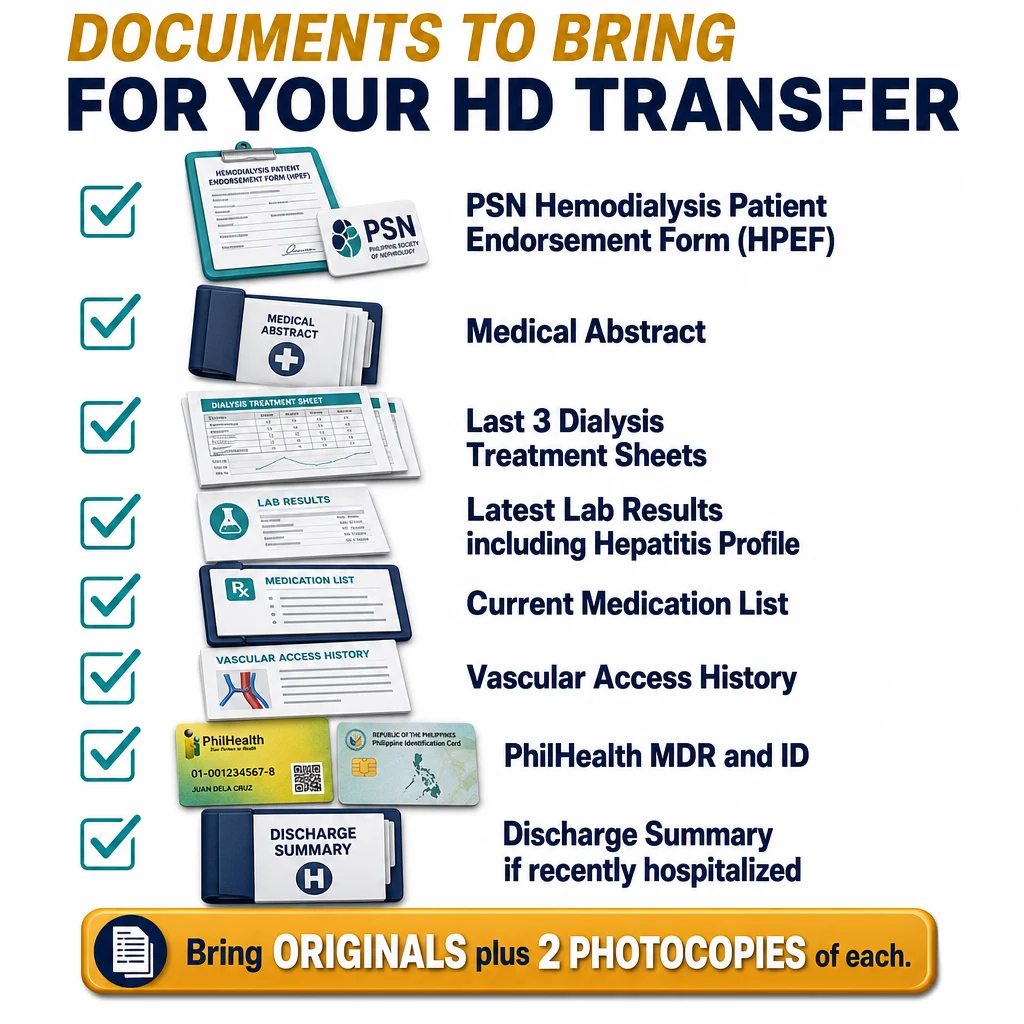 All documents you need to bring when transferring — even when your nephrologist stays the same, the receiving center needs complete clinical records.Lahat ng mga dokumentong kailangan mong dalhin kapag naglilipat — kahit mananatiling pareho ang iyong nephrologist, ang tatanggap na sentro ay nangangailangan ng kumpletong mga klinikal na rekord.Tanan nga mga dokumento nga kinahanglan nimo nga dad-on sa pagbalhin — bisan katugma ang imong nephrologist, ang receiving center nanginahanglan og kumpletong mga klinikal nga rekord.Lahat ning mga dokumentong kailangan mung dalhin kapag naglilipat — kahit mananatiling pareho ing iyung nephrologist, ing tatanggap na sentro kailangan ning kumpletong mga klinikal na rekord.
Is your nephrologist accredited at the receiving center?Akreditado ba ang iyong nephrologist sa tatanggap na sentro?Akreditado ba ang imong nephrologist sa receiving center?Akreditado ba ing iyung nephrologist king tatanggap na sentro?
A nephrologist must hold accreditation or clinical privileges at a dialysis center to see patients there. If your nephrologist is not accredited at the receiving center, you will need to either: (a) find a center where they hold accreditation, or (b) accept a new nephrologist at the receiving center.Ang isang nephrologist ay dapat may akreditasyon o klinikal na pribilehiyo sa isang sentro ng dialysis upang makita ang mga pasyente doon. Kung ang iyong nephrologist ay hindi akreditado sa tatanggap na sentro, kailangan mong: (a) hanapin ang sentro kung saan sila may akreditasyon, o (b) tanggapin ang bagong nephrologist sa tatanggap na sentro.Ang usa ka nephrologist kinahanglan adunay accreditation o klinikal nga pribilehiyo sa usa ka sentro sa dialysis aron makita ang mga pasyente didto. Kung ang imong nephrologist dili akreditado sa receiving center, kinahanglan nimo: (a) pangitaon ang sentro diin sila adunay accreditation, o (b) dawaton ang bag-ong nephrologist sa receiving center.Ing metung a nephrologist kailangan adwang akreditasyon o klinikal na pribilehiyo king metung a sentro ning dialysis para makita ing mga pasyente doron. Kung ing iyung nephrologist e akreditado king tatanggap na sentro, kailangan mung: (a) hanapin ing sentro kung sain la adwang akreditasyon, o (b) tanggapin ing bagung nephrologist king tatanggap na sentro.
Steps for center-only transfer with the same nephrologistMga hakbang para sa paglipat ng sentro lamang na may parehong nephrologistMga lakang alang sa center-only nga transfer nga mao rang nephrologistMga hakbang para king paglipat ning sentro lamang na adwang mismung nephrologist
- Ask your nephrologist directly whether they are accredited at your chosen receiving centerTanungin nang direkta ang iyong nephrologist kung sila ay akreditado sa iyong piniling tatanggap na sentroPangutana direkta sa imong nephrologist kung sila akreditado sa imong gipiling receiving centerTanungin nang direkta ing iyung nephrologist kung sila akreditado king iyung piniling tatanggap na sentro
- If not, ask whether they are willing and able to apply for accreditation — this takes timeKung hindi, itanong kung handang makipagtulungan at makapag-apply sila para sa akreditasyon — tumatagal ito ng orasKung dili, pangutana kung andam ug makahimo silang mag-apply alang sa accreditation — molungtad kini og panahonKung e, itanong kung handa at makakaya lang mag-apply para keng akreditasyon — tumatagal iti ning oras
- If accreditation at the receiving center is not feasible, ask your nephrologist for a referral to a trusted colleague at that centerKung hindi posible ang akreditasyon sa tatanggap na sentro, humingi sa iyong nephrologist ng referral sa pinagkakatiwalaang kasamahan sa sentrong iyonKung dili posible ang accreditation sa receiving center, pangayo sa imong nephrologist og referral ngadto sa gisaligan nga kauban sa maong sentroKung e posible ing akreditasyon king tatanggap na sentro, huminge king iyung nephrologist ning referral king pinagkakatiwalaang kasamahan king manung sentro
- Ensure the PSN endorsement form is completed regardless of whether the nephrologist changesTiyakin na nakumpleto ang PSN endorsement form anuman ang mangyari sa nephrologistSiguraduha nga nahuman ang PSN endorsement form bisan magbag-o o dili ang nephrologistTiyakin na nakumpleto ing PSN endorsement form anuman ing mangyari king nephrologist
- Ensure proper handover of all clinical information even if the nephrologist is the same personTiyakin ang wastong paglipat ng lahat ng klinikal na impormasyon kahit ang nephrologist ay iisa pa rinSiguraduha ang husto nga handover sa tanan nga klinikal nga impormasyon bisan mao rang nephrologistTiyakin ing wastong paglipat ning lahat ning klinikal na impormasyon kahit ing nephrologist mismung tao pa rin
Regulatory and administrative considerations.Mga regulasyon at administratibong konsiderasyon.Mga regulasyon ug administratibong konsiderasyon.Mga regulasyon at administratibong konsiderasyon.
DOH (Department of Health) — Dialysis Center LicensingDOH (Kagawaran ng Kalusugan) — Lisensya ng Sentro ng DialysisDOH (Department of Health) — Lisensya sa Sentro sa DialysisDOH (Kagawaran ning Kalusugan) — Lisensya ning Sentro ning Dialysis
All hemodialysis facilities in the Philippines must be Department of Health (DOH)-licensed under DOH Administrative Order 2012-0001, which sets standards for safe and effective hemodialysis care. Before transferring, verify that your receiving center is currently licensed and compliant. A DOH-licensed center will have proper staffing, equipment, and infection-control procedures. Reference: doh.gov.phLahat ng pasilidad ng hemodialysis sa Pilipinas ay dapat may lisensya ng DOH sa ilalim ng DOH Administrative Order 2012-0001, na nagtatakda ng mga pamantayan para sa ligtas at epektibong pag-aalaga ng hemodialysis. Bago lumipat, tiyakin na ang iyong tatanggap na sentro ay may kasalukuyang lisensya at sumusunod. Ang sentro na may lisensya ng DOH ay magkakaroon ng tamang kawani, kagamitan, at mga pamamaraan ng kontrol ng impeksyon. Sanggunian: doh.gov.phAng tanan nga mga pasilidad sa hemodialysis sa Pilipinas kinahanglan DOH-licensed ubos sa DOH Administrative Order 2012-0001, nga nagtakda sa mga pamantayan alang sa luwas ug epektibong pag-atiman sa hemodialysis. Sa wala pa magbalhin, pamatud-i nga ang imong receiving center karon nga adunay lisensya ug compliant. Ang sentro nga DOH-licensed adunay hustong kawani, kagamitan, ug mga pamamaraan sa kontrol sa impeksyon. Reperensya: doh.gov.phLahat ning mga pasilidad ning hemodialysis king Pilipinas kailangan DOH-licensed ubos king DOH Administrative Order 2012-0001, na nagtakda ning mga pamantayan para king ligtas at epektibong pag-aalaga ning hemodialysis. Bago lumipat, tiyakin na ing iyung tatanggap na sentro adwang kasalukuyang lisensya at sumusunod. Ing sentro na adwang lisensya ning DOH adwang tamang kawani, kagamitan, at mga pamamaraan ning kontrol ning impeksyon. Sanggunian: doh.gov.ph
PSN (Philippine Society of Nephrology) — Clinical StandardsPSN (Philippine Society of Nephrology) — Mga Klinikal na PamantayanPSN (Philippine Society of Nephrology) — Mga Klinikal nga PamantayanPSN (Philippine Society of Nephrology) — Mga Klinikal na Pamantayan
The PSN HD Guidelines 3rd Edition 2024 emphasize proper nephrologist supervision, formal endorsement documentation, continuity of care, infection-control documentation, and safe dialysis transitions. The PSN Hemodialysis Patient's Endorsement Form is the official PSN-recommended instrument for all patient transfers. Reference: psn.org.phAng PSN HD Guidelines 3rd Edition 2024 ay nagbibigay-diin sa wastong pangangasiwa ng nephrologist, pormal na dokumentasyon ng endorsement, pagpapatuloy ng pag-aalaga, dokumentasyon ng kontrol ng impeksyon, at ligtas na paglipat ng dialysis. Ang PSN Hemodialysis Patient's Endorsement Form ay ang opisyal na instrumento na inirerekomenda ng PSN para sa lahat ng paglipat ng pasyente. Sanggunian: psn.org.phAng PSN HD Guidelines 3rd Edition 2024 nagpugos sa husto nga pag-atiman sa nephrologist, pormal nga endorsement documentation, continuity of care, infection-control documentation, ug luwas nga mga transition sa dialysis. Ang PSN Hemodialysis Patient's Endorsement Form mao ang opisyal nga instrumento nga gi-rekomendar sa PSN alang sa tanan nga transfer sa pasyente. Reperensya: psn.org.phIng PSN HD Guidelines 3rd Edition 2024 nagbibigay-diin king wastong pamamahala ning nephrologist, pormal na dokumentasyon ning endorsement, pagpapatuloy ning pag-aalaga, dokumentasyon ning kontrol ning impeksyon, at ligtas na mga paglipat ning dialysis. Ing PSN Hemodialysis Patient's Endorsement Form ing opisyal na instrumento na inirerekomenda ning PSN para king lahat ning paglipat ning pasyente. Sanggunian: psn.org.ph
PMA (Philippine Medical Association) — Medical EthicsPMA (Philippine Medical Association) — Medikal na EtikaPMA (Philippine Medical Association) — Medikal nga EtikaPMA (Philippine Medical Association) — Medikal na Etika
Transfers should be guided by the ethical principles of patient welfare, autonomy, safety, continuity of care, and professional cooperation. Transfers should never be driven by hidden referral fees, coercion, pressure tactics, or financial kickbacks. These constitute violations of the PMA Code of Ethics. Reference: pma.com.phAng mga paglipat ay dapat gabayan ng etikal na mga prinsipyo ng kapakanan ng pasyente, awtonomiya, kaligtasan, pagpapatuloy ng pag-aalaga, at propesyonal na kooperasyon. Hindi kailanman dapat itulak ng mga nakatagong bayad sa referral, pamimilit, presyon, o finansyal na kickback ang mga paglipat. Ang mga ito ay bumubuo ng mga paglabag sa PMA Code of Ethics. Sanggunian: pma.com.phAng mga transfer kinahanglan gabayan sa mga etikal nga prinsipyo sa kaayuhan sa pasyente, awtonomiya, kalamianan, continuity of care, ug propesyonal nga kooperasyon. Ang mga transfer dili gayud itulod sa mga tinago nga referral fees, pamugos, mga taktika sa presyon, o mga finansyal na kickback. Kini nagtimangno sa mga paglabag sa PMA Code of Ethics. Reperensya: pma.com.phIng mga paglipat kailangan gabayan ning etikal na mga prinsipyo ning kapakanan ning pasyente, awtonomiya, kaligtasan, pagpapatuloy ning pag-aalaga, at propesyonal na kooperasyon. E kailanman dapat itulak ning mga nakatagong bayad king referral, pamimilit, presyon, o finansyal na kickback ing mga paglipat. Iti bumubuo ning mga paglabag king PMA Code of Ethics. Sanggunian: pma.com.ph
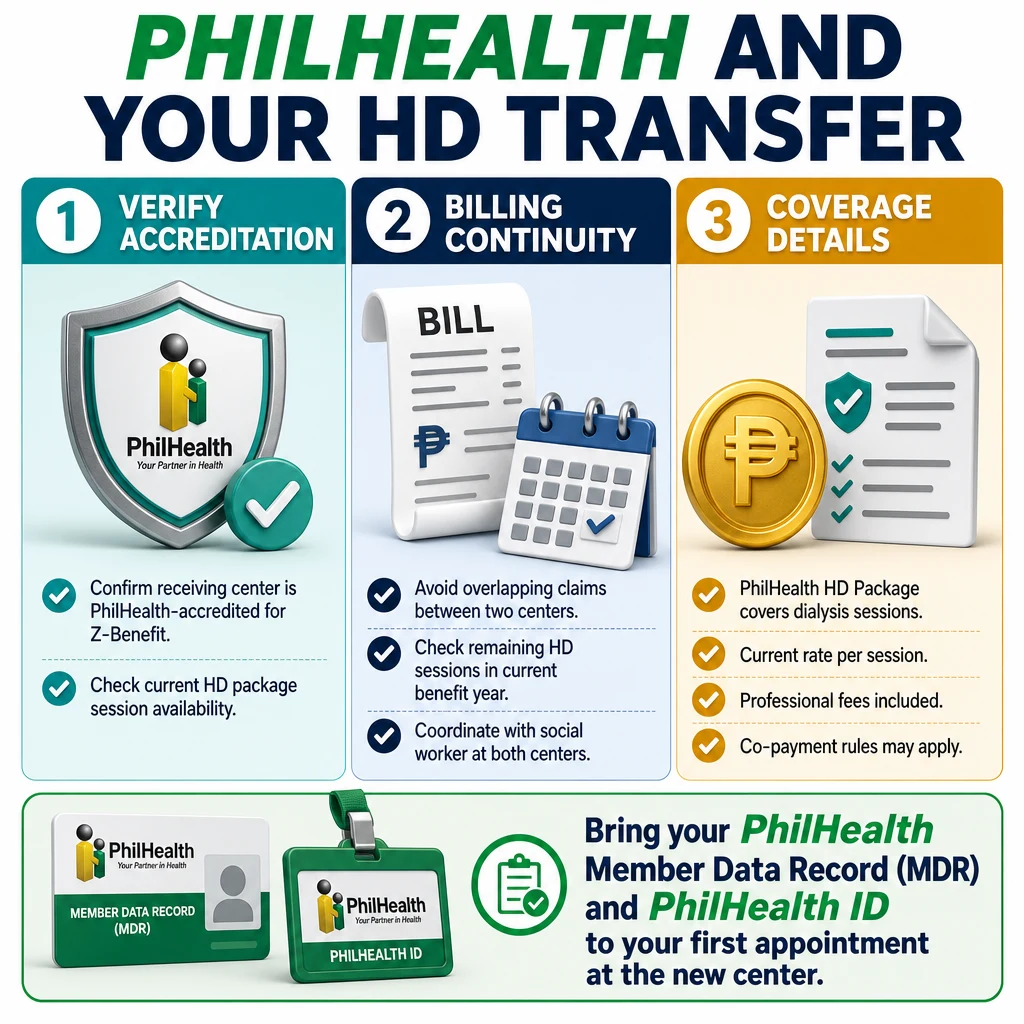 PhilHealth coverage, Z-Benefit accreditation requirements, and billing continuity considerations when transferring HD centers in the Philippines.Saklaw ng PhilHealth, mga kinakailangan ng akreditasyon ng Z-Benefit, at mga konsiderasyon sa pagpapatuloy ng billing kapag naglilipat ng HD center sa Pilipinas.PhilHealth coverage, mga kinahanglan sa accreditation sa Z-Benefit, ug mga konsiderasyon sa billing continuity sa pagbalhin sa HD center sa Pilipinas.Saklaw ning PhilHealth, mga kinakailangan ning akreditasyon ning Z-Benefit, at mga konsiderasyon king pagpapatuloy ning billing kapag naglilipat ning HD center king Pilipinas.
PhilHealth — Coverage and Billing ContinuityPhilHealth — Saklaw at Pagpapatuloy ng BillingPhilHealth — Coverage ug Billing ContinuityPhilHealth — Saklaw at Pagpapatuloy ning Billing
Before transferring, confirm that your receiving center is PhilHealth-accredited. Check your remaining HD package sessions and clarify billing continuity. Ensure there are no duplicate claims issues that could arise from overlapping claims between two centers.Bago lumipat, kumpirmahin na ang iyong tatanggap na sentro ay akreditado sa PhilHealth. Suriin ang iyong natitirang mga sesyon ng HD package at linawin ang pagpapatuloy ng billing. Tiyakin na walang mga isyu sa duplicate claims na maaaring lumabas mula sa magkapatong na mga claim sa pagitan ng dalawang sentro.Sa wala pa magbalhin, kumpirmaha nga ang imong receiving center PhilHealth-accredited. Susihon ang imong nabilin nga mga sesyon sa HD package ug ipatin ang billing continuity. Siguraduha nga walay mga isyu sa duplicate claims nga mahimong motungha gikan sa magkapatong nga mga claim tali sa duha ka sentro.Bago lumipat, kumpirmahin na ing iyung tatanggap na sentro PhilHealth-accredited. Suriin ing iyung natitirang mga sesyon ning HD package at linawin ing pagpapatuloy ning billing. Tiyakin na wala ning mga isyu keng duplicate claims na maaaring lumabas mibigay king magkapatong na mga claim king daragul a sentro.
Under PhilHealth Circular No. 2024-0023, the HD package covers ₱6,350 per session, inclusive of professional fees (PF). Session limits and co-payment rules may apply — verify current coverage directly with PhilHealth or your center's social worker.Sa ilalim ng PhilHealth Circular No. 2024-0023, ang HD package ay sumasaklaw ng ₱6,350 bawat sesyon, kasama ang mga bayad ng propesyonal (PF). Maaaring mag-apply ang mga limitasyon ng sesyon at mga patakaran sa co-payment — tiyakin ang kasalukuyang saklaw nang direkta sa PhilHealth o sa social worker ng iyong sentro.Ubos sa PhilHealth Circular No. 2024-0023, ang HD package nagtabon sa ₱6,350 matag sesyon, lakip ang mga bayad sa propesyonal (PF). Ang mga limitasyon sa sesyon ug mga lagda sa co-payment mahimong mag-apply — pamatud-i ang karon nga coverage direkta sa PhilHealth o sa social worker sa imong sentro.Ubos king PhilHealth Circular No. 2024-0023, ing HD package nagtabon king ₱6,350 matyang sesyon, kasama ing mga bayad ning propesyonal (PF). Malyaring mag-apply ing mga limitasyon ning sesyon at mga patakaran king co-payment — tiyakin ing kasalukuyang saklaw nang direkta king PhilHealth o king social worker ning iyung sentro.
PhilHealth tip: confirm accreditation before your first sessionTip sa PhilHealth: kumpirmahin ang akreditasyon bago ang iyong unang sesyonTip sa PhilHealth: kumpirmaha ang accreditation sa wala pa ang imong unang sesyonTip keng PhilHealth: kumpirmahin ing akreditasyon bago king iyung unang sesyon
If you begin dialysis at a center that turns out to be non-accredited (or not yet accredited for you specifically), those sessions may not be reimbursable. Always verify this in advance — do not rely on verbal assurances alone.Kung magsimula kang mag-dialysis sa isang sentro na lumalabas na hindi akreditado (o hindi pa akreditado para sa iyo nang partikular), ang mga sesyong iyon ay maaaring hindi maa-reimburse. Palaging tiyakin ito nang maaga — huwag umasa sa mga verbal na katiyakan lamang.Kung mosugod ka sa dialysis sa sentro nga nahimong non-accredited (o wala pa akreditado para sa iyo labi na), ang mga sesyon mahimong dili ma-reimburse. Kanunay pamatud-i kini sa unahan — ayaw nagtuo sa mga verbal nga pagpapasiguro lamang.Kung magsimula kang mag-dialysis king metung a sentro na lumalabas na e akreditado (o e pa akreditado para kanimo nang partikular), ing mga sesyong iti maaaring e ma-reimburse. Palaging tiyakin iti nang maaga — e umasa king mga verbal na katiyakan lamang.
Red flags: when NOT to transfer abruptly.Mga red flag: kung KAILAN HINDI dapat lumipat nang bigla.Mga red flag: kung KANUS-A dili angay magbalhin nang kalit.Mga red flag: kung KAILAN E dapat lumipat nang biglaan.
If any of the following apply to you right now, do not attempt to transfer. Complete your current episode of care first, stabilize, then plan your transfer properly.Kung ang alinman sa mga sumusunod ay naaangkop sa iyo ngayon mismo, huwag subukang lumipat. Kumpletuhin muna ang iyong kasalukuyang pag-aalaga, stabilisahin, pagkatapos ay planuhing maayos ang iyong paglipat.Kung ang bisan unsa sa mosunod moapply kanimo karon mismo, ayaw sulayi magbalhin. Humana una ang imong karon nga episodyo sa pag-atiman, stable, unya plano ang imong transfer sa husto.Kung ing alinman king mga sumusunod ay naaangkop kanimo ngunyan mismo, e subukan ang lumipat. Kumpletuhin nung maona ing iyung kasalukuyang pag-aalaga, maging stable, pagkatapos planuhin nang maayos ing iyung paglipat.
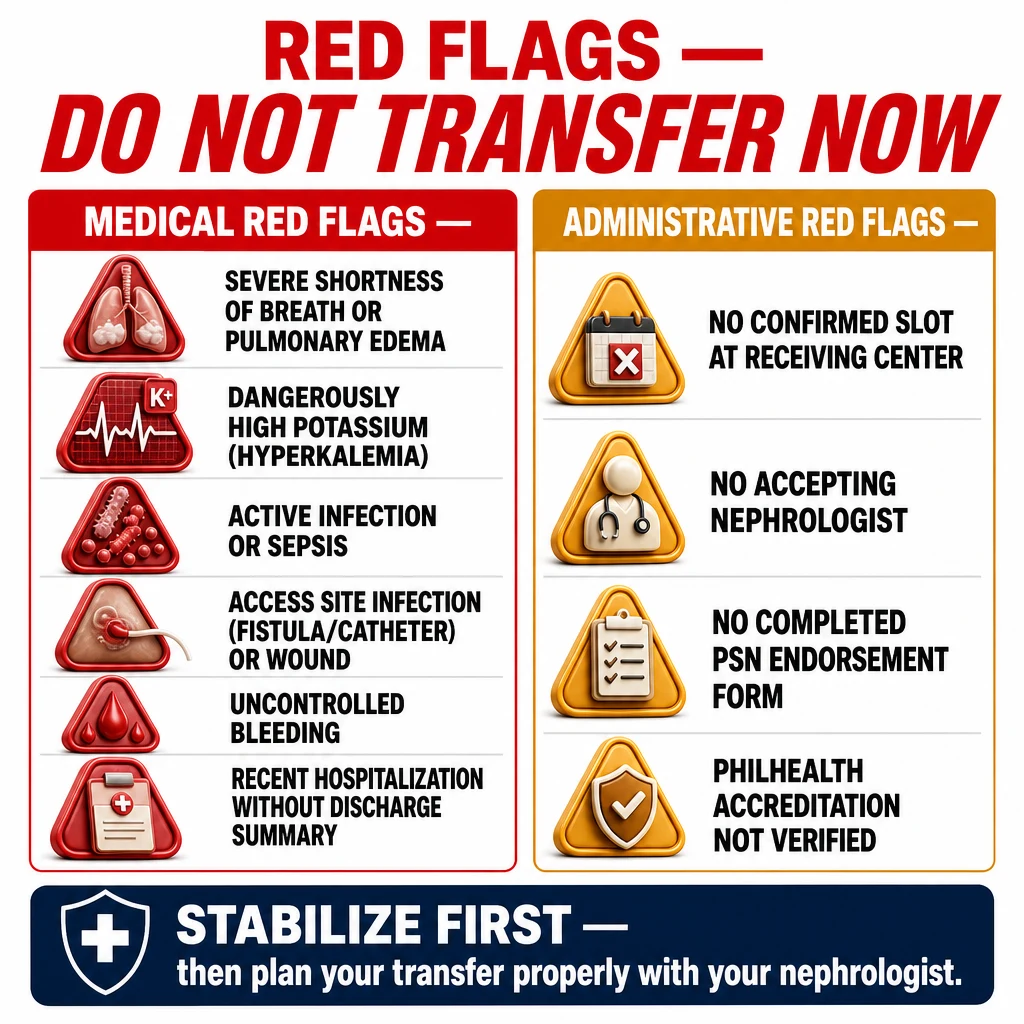 Do not attempt to transfer in any of these situations. Stabilize first — then plan your transfer with your nephrologist.Huwag subukang lumipat sa alinman sa mga sitwasyong ito. Maging stable muna — pagkatapos ay planuhin ang iyong paglipat kasama ang iyong nephrologist.Ayaw sulayi magbalhin sa bisan usa niining mga sitwasyon. Mag-stable una — unya plano ang imong transfer uban sa imong nephrologist.E subukan ang lumipat king alinman king mga sitwasyong iti. Maging stable nung maona — pagkatapos planuhin ing iyung paglipat kasama ing iyung nephrologist.
Medical red flagsMga medikal na red flagMga medikal nga red flagMga medikal na red flag
- Severe shortness of breath or difficulty breathingMatinding hipo ng hininga o hirap sa paghingaGrabe nga kakulang sa gininhawa o kalisod sa paghingaMaragul a hirap sa paghinga o hirap huminga
- Very high potassium (hyperkalemia) confirmed on recent labsNapakataas na potassium (hyperkalemia) na nakumpirma sa kamakailanang mga labKaayo taas nga potassium (hyperkalemia) nga nakumpirma sa bag-o lang nga mga labNapakataas na potassium (hyperkalemia) na nakumpirma keng bag-ung mga lab
- Active systemic infection or sepsisAktibong impeksyon sa buong katawan o sepsisAktibo nga systemic infection o sepsisAktibong impeksyon king buong katawan o sepsis
- Active access infection (fistula, graft, or catheter site)Aktibong impeksyon sa access (fistula, graft, o lugar ng catheter)Aktibo nga access infection (fistula, graft, o catheter site)Aktibong impeksyon king access (fistula, graft, o lugar ning catheter)
- Uncontrolled bleedingHindi mapigilan na pagdurugoDili mapugngan nga pagdugoE mapigilan na pagdurugo
- Severe or persistent hypotensionMatinding o tuluy-tuloy na hypotensionGrabe o padayon nga hypotensionMaragul o tuluy-tuluy na hypotension
- Recent hospitalization without a formal discharge summaryKamakailan na ospitalisasyon nang walang pormal na buod ng dischargeBag-o lang nga ospitalisasyon nga walay pormal nga discharge summaryKamakailan na ospitalisasyon nang wala ring pormal na buod ning discharge
Administrative red flagsMga administratibong red flagMga administratibong red flagMga administratibong red flag
- No confirmed slot at the receiving centerWalang nakumpirmang slot sa tatanggap na sentroWalay nakumpirmang slot sa receiving centerWala ring nakumpirmang slot king tatanggap na sentro
- No nephrologist accepted at the receiving centerWalang nephrologist na tinanggap sa tatanggap na sentroWalay nephrologist nga gidawat sa receiving centerWala ring nephrologist na tinanggap king tatanggap na sentro
- Endorsement form not yet completedHindi pa kumpleto ang endorsement formWala pa mahuman ang endorsement formE pa kumpleto ing endorsement form
- PhilHealth accreditation of receiving center not confirmedHindi pa nakumpirma ang akreditasyon ng PhilHealth ng tatanggap na sentroPhilHealth accreditation sa receiving center wala pa makumpirmaE pa nakumpirma ing akreditasyon ning PhilHealth ning tatanggap na sentro
- Transfer would cause a gap in dialysis sessionsAng paglipat ay magdudulot ng agwat sa mga sesyon ng dialysisAng transfer magdulot og gab-un sa mga sesyon sa dialysisIng paglipat magdudulot ning agwat king mga sesyon ning dialysis
If you are in a medical crisis, do not transfer — seek emergency care.Kung ikaw ay nasa medikal na krisis, huwag lumipat — humingi ng emergency na pag-aalaga.Kung naa ka sa medikal nga krisis, ayaw mobalhin — mangita og emergency nga pag-atiman.Kung ika ay nasa medikal na krisis, e lumipat — huminge ning emergency na pag-aalaga.
Go to the nearest emergency department or call for an ambulance. Transfers are elective processes. They are never appropriate during an acute medical emergency.Pumunta sa pinakamalapit na emergency department o tumawag ng ambulansya. Ang mga paglipat ay mga elektibong proseso. Hindi kailanman angkop ang mga ito sa panahon ng talamak na medikal na emerhensya.Adto sa pinaka-duol nga emergency department o tawagi og ambulansya. Ang mga transfer mga elective nga proseso. Dili kini angay sa panahon sa usa ka acute nga medikal nga emerhensya.Pumunta king pinakamalapit na emergency department o tumawag ning ambulansya. Ing mga paglipat mga elektibong proseso. E kailanman angkop iti king panahon ning talamak na medikal na emerhensya.
Patient transfer checklist.Checklist para sa paglipat ng pasyente.Checklist alang sa transfer sa pasyente.Checklist para king paglipat ning pasyente.
Review this checklist before attending your last session at your current center. Every item should be checked before you transfer.Suriin ang checklist na ito bago pumunta sa iyong huling sesyon sa iyong kasalukuyang sentro. Dapat na nasuri ang bawat aytem bago ka lumipat.Susihon kini nga checklist sa wala pa moatend sa imong katapusan nga sesyon sa imong karon nga sentro. Matag item kinahanglan masusi sa wala pa magbalhin.Suriin ing checklist na iti bago pumunta king iyung katapusang sesyon king iyung kasalukuyang sentro. Kailangan nasuri ing bawat aytem bago ka lumipat.
✅ Transfer Readiness ChecklistChecklist ng Kahandaan sa PaglipatChecklist sa Kaandam alang sa TransferChecklist ning Kahandaan king Paglipat
- I have confirmed a slot and schedule at the receiving centerNakumpirma ko ang slot at iskedyul sa tatanggap na sentroNakumpirma nako ang slot ug iskedyul sa receiving centerNakumpirma ku ing slot at iskedyul king tatanggap na sentro
- I have confirmed that a nephrologist has accepted me at the receiving centerNakumpirma ko na tinanggap ako ng isang nephrologist sa tatanggap na sentroNakumpirma nako nga gidawat ako sa usa ka nephrologist sa receiving centerNakumpirma ku na tinanggap naku ing metung a nephrologist king tatanggap na sentro
- I have confirmed the receiving center is PhilHealth-accreditedNakumpirma ko na ang tatanggap na sentro ay akreditado sa PhilHealthNakumpirma nako nga ang receiving center PhilHealth-accreditedNakumpirma ku na ing tatanggap na sentro PhilHealth-accredited
- I have informed my current nephrologist about the transferNaipagbigay-alam ko sa aking kasalukuyang nephrologist ang paglipatNapahibalo nako sa akong karon nga nephrologist ang transferNaipaalam ku king iyung kasalukuyang nephrologist ing paglipat
- I have informed the current dialysis center administrationNaipagbigay-alam ko sa administrasyon ng kasalukuyang sentro ng dialysisNapahibalo nako sa administrasyon sa karon nga sentro sa dialysisNaipaalam ku king administrasyon ning kasalukuyang sentro ning dialysis
- I have requested and received the PSN Endorsement Form (completed and signed)Hiningi ko at natanggap ang PSN Endorsement Form (kumpleto at napirmahan)Gipangayo nako ug nadawat ang PSN Endorsement Form (kompleto ug napirmahan)Hiningku at natanggap ing PSN Endorsement Form (kumpleto at napirmahan)
- I have obtained my medical abstractNakuha ko ang aking medical abstractNakuha nako ang akong medical abstractNakuha ku ing iyung medical abstract
- I have my last 3 dialysis treatment sheetsMayroon akong huling 3 treatment sheets ng dialysisNaa nako ang akong katapusang 3 treatment sheets sa dialysisAdwu na ku ing katapusang 3 treatment sheets ning dialysis
- I have my latest laboratory results (including hepatitis profile)Mayroon akong pinakabagong mga resulta sa laboratoryo (kasama ang hepatitis profile)Naa nako ang pinakabag-o nga mga resulta sa laboratoryo (lakip ang hepatitis profile)Adwu na ku ing pinakabagung mga resulta keng laboratoryo (kasama ing hepatitis profile)
- I have my current medication listMayroon akong listahan ng kasalukuyang gamotNaa nako ang akong listahan sa karon nga mga tambalAdwu na ku ing listahan ning kasalukuyang mga gamot
- I have my vascular access history documentsMayroon akong mga dokumento ng kasaysayan ng vascular accessNaa nako ang akong mga dokumento sa kasaysayan sa vascular accessAdwu na ku ing mga dokumento ning kasaysayan ning vascular access
- I have my PhilHealth MDR and IDMayroon akong PhilHealth MDR at IDNaa nako ang akong PhilHealth MDR ug IDAdwu na ku ing PhilHealth MDR at ID
- I know my exact first dialysis date at the receiving centerAlam ko ang aking eksaktong unang petsa ng dialysis sa tatanggap na sentroNahibaw-an nako ang akong eksaktong unang petsa sa dialysis sa receiving centerNung ku ing iyung eksaktong unang petsa ning dialysis king tatanggap na sentro
- My first session at the new center falls on my next scheduled dialysis day — no gapAng aking unang sesyon sa bagong sentro ay nahuhulog sa aking susunod na nakatakdang araw ng dialysis — walang agwatAng akong unang sesyon sa bag-ong sentro naa sa akong sunod nga gi-iskedyul nga adlaw sa dialysis — walay gab-unIng iyung unang sesyon king bagung sentro nahuhulog king iyung kasunud na nakatakdang aldo ning dialysis — wala ring agwat
- I will NOT miss any dialysis sessions during this transitionHINDI ko palalagtasin ang anumang sesyon ng dialysis sa panahon ng transisyong itoDILI ko puslongan ang bisan unsang sesyon sa dialysis sa panahon sa transisyonE ku lalaktawan ing anumang sesyon ning dialysis king panahon ning transisyon
Templates you can use.Mga template na maaari mong gamitin.Mga template nga magagamit nimo.Mga template na maaari mung gamitin.
Copy, customize, and bring these to your current center or send to your receiving center. Fill in the bracketed fields with your own details.Kopyahin, i-customize, at dalhin ang mga ito sa iyong kasalukuyang sentro o ipadala sa iyong tatanggap na sentro. Punan ang mga field sa loob ng bracket gamit ang iyong sariling mga detalye.Kopyahon, i-customize, ug dad-on kini sa imong karon nga sentro o ipadala sa imong receiving center. Sulaton ang mga field sa sulod sa bracket gamit ang imong kaugalingon nga mga detalye.Kopyahin, i-customize, at dalhin iti king iyung kasalukuyang sentro o ipadala king iyung tatanggap na sentro. Punan ing mga field king loob ning bracket gamit ing iyung sariling mga detalye.
Changing dialysis centers or nephrologists is your right. The safest transfer is respectful, coordinated, documented, continuous, and medically supervised. Never stop or delay dialysis while waiting for transfer arrangements. If your new center is not ready yet, continue your current sessions — your life depends on it.Ang pagpapalit ng sentro ng dialysis o nephrologist ay iyong karapatan. Ang pinakaligtas na paglipat ay magalang, koordinado, dokumentado, tuluy-tuloy, at may medikal na pangangasiwa. Huwag kailanman ihinto o antalahin ang dialysis habang naghihintay sa mga plano ng paglipat. Kung ang iyong bagong sentro ay hindi pa handa, ituloy ang iyong kasalukuyang mga sesyon — ang iyong buhay ay nakasalalay dito.Ang pagbag-o sa sentro sa dialysis o nephrologist mao ang imong katungod. Ang labing luwas nga transfer maayo og pagtahod, koordinado, dokumentado, padayon, ug adunay medikal nga pag-atiman. Ayaw gayud hunong o palangton ang dialysis samtang naghulat sa mga plano sa transfer. Kung ang imong bag-ong sentro dili pa andam, ipadayon ang imong karon nga mga sesyon — ang imong kinabuhi nagdepende niini.Ing pagpapalit ning sentro ning dialysis o nephrologist ing iyung karapatan. Ing pinakaligtas na paglipat magalang, koordinado, dokumentado, tuluy-tuloy, at adwang medikal na pangangasiwa. E kailanman ihunto o antalahin ing dialysis habang naghihintay king mga plano ning paglipat. Kung ing iyung bagung sentro e pa handa, ituloy ing iyung kasalukuyang mga sesyon — ing iyung buhay nakasalalay keti.
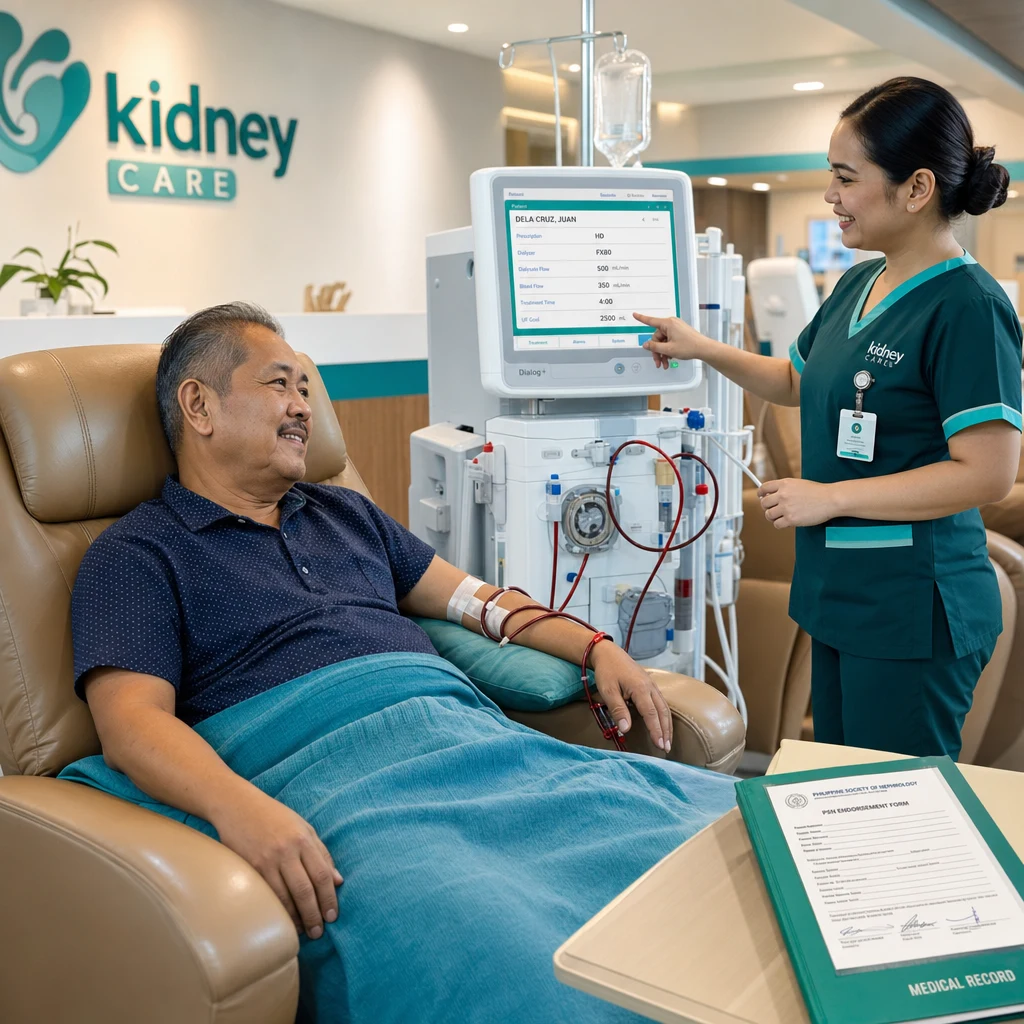 When done right, an HD transfer ensures you arrive at your new center with complete records, a confirmed schedule, and a nephrologist who already knows your case.Kapag ginawa nang tama, ang HD transfer ay tinitiyak na darating ka sa iyong bagong sentro na may kumpletong mga rekord, nakumpirmang iskedyul, at nephrologist na kilala na ang iyong kaso.Kung mahimo sa husto, ang HD transfer nagtino nga moabot ka sa imong bag-ong sentro nga adunay kumpletong mga rekord, nakumpirmang iskedyul, ug nephrologist nga nahibaw-an na ang imong kaso.Kapag ginawa nang tama, ing HD transfer tinitiyak na darating ka king iyung bagung sentro na adwang kumpletong mga rekord, nakumpirmang iskedyul, at nephrologist na nunuku na ing iyung kaso.