CKD anemia content reviewed November 6, 2026 against KDIGO 2026. Population-specific rules are in the Evidence section below and in the CKD anemia guide.
- Select the adult population and enter serum iron, TIBC, and ferritin in the selected units.
- Indicate systemic infection if present.
- Review TSAT and combined iron criteria with the treating clinician. This tool does not set an ESA dose.
When to use
Use in adults with CKD and anemia, or suspected iron deficiency, when serum iron, TIBC, and ferritin come from the same draw. The tool calculates TSAT and applies the KDIGO 2026 criteria for the selected population.
- Hemodialysis, peritoneal dialysis, and non-dialysis CKD are covered directly by KDIGO 2026.
- Kidney transplant recipients use the non-dialysis criteria (KDIGO 2026 Appendix Figure 4).
- Children need pediatric nephrology assessment; adult criteria are not applied.
Interpretation and limitations
- Ferritin is an acute-phase reactant. Infection, inflammation, liver disease, or malignancy raise it independently of stores.
- Low TSAT with high ferritin suggests iron-restricted erythropoiesis; it is not proof of iron deficiency or of iron overload.
- “Reassess” is not “iron replete.” It means the initiation criteria are not met; investigate persistent anemia.
- Profound iron deficiency without anemia (ferritin <30 ng/mL and TSAT <20%) may still warrant oral or IV iron, especially with symptoms.
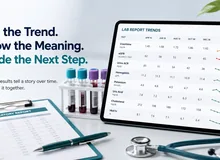
- Draw conditions: serum iron varies with recent intake and time of day; draw fasting, avoid the days after IV iron, and follow trends.
Why Use It
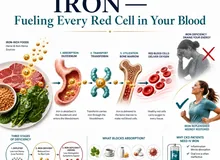
Iron deficiency is the most common and most correctable cause of anemia and of resistance to erythropoiesis-stimulating agents in CKD. Because the kidneys' anemia is often "iron-restricted" — adequate stores that cannot be mobilized fast enough for erythropoiesis — TSAT and ferritin must be read together: a low TSAT with normal or high ferritin signals iron-restricted erythropoiesis that may still respond to iron, while a low TSAT with low ferritin signals systemic iron deficiency. Reading them together avoids both untreated deficiency and unnecessary iron loading, and ensures ESA dosing is not escalated when the real problem is iron.
Iron Status Calculator — TSAT & KDIGO 2026 Iron Decision
Enter iron panel results to calculate TSAT and see whether KDIGO 2026 criteria suggest considering iron, reassessing, withholding routine iron, or pausing for infection. Your doctor uses this with your full picture to decide whether IV iron, oral iron, or no iron therapy is appropriate for you.
⚕ TSAT = (Serum Iron ÷ TIBC) × 100. Ferritin is an acute phase reactant — elevated by inflammation, infection, or malignancy independent of iron stores. Classification per KDIGO 2026. This tool is for educational guidance only — iron therapy decisions require physician assessment.
Next steps
- Consider iron: confirm anemia and reversible causes. In HD, IV iron is suggested with a proactive, monitored regimen; outside HD, choose oral or IV iron and switch to IV if oral is ineffective after 1–3 months. Size a course with the Ganzoni calculator.
- Withhold: stop routine iron, review the trend and inflammation markers, and recheck before restarting.
- Pause: resume after the systemic infection has been treated and indices are reassessed.
- Monitor: Hb, ferritin, and TSAT every 1–3 months in HD and every 3 months otherwise during iron treatment.
Evidence and clinical rules
| Population / decision | KDIGO 2026 guidance |
|---|---|
| Anemia + hemodialysis (HD): initiate iron | Ferritin ≤500 ng/mL and TSAT ≤30%. IV iron is suggested; use a proactive, monitored approach. |
| Anemia + non-dialysis CKD or peritoneal dialysis (PD): initiate iron | Ferritin <100 ng/mL and TSAT <40%, or ferritin ≥100 and <300 ng/mL and TSAT <25%. |
| Route outside HD | Choose oral or IV iron using severity, response, tolerance, preference, availability, and cost. Switch an optimal oral regimen to IV if ineffective after 1–3 months or poorly tolerated. |
| Withhold routine iron | Ferritin >700 ng/mL or TSAT ≥40%. An elevated ferritin alone does not diagnose iron overload. |
| Systemic infection | Consider temporarily suspending iron. Inflammation without infection needs clinical assessment rather than an automatic infection diagnosis. |
| Profound iron deficiency without anemia | Ferritin <30 ng/mL and TSAT <20%: consider oral or IV iron, especially with symptoms (practice point 2.11). |
| Kidney transplant recipients | KDIGO 2026 applies the non-dialysis criteria (Appendix Figure 4). Monitor phosphate after ferric carboxymaltose and similar preparations. |
| Monitoring during iron treatment | Hb, ferritin, TSAT every 3 months in non-dialysis CKD/PD; every 1–3 months in HD, often monthly. Test sooner after blood loss, hospitalization, ESA escalation, or rapidly changing iron indices. |
Source: KDIGO 2026 Anemia in CKD, recommendations 2.1–2.4 and 3.2.1–3.3.1; practice points 2.2–2.8 and 3.4.1.2–3.4.3.5. Reviewed November 6, 2026. Apply clinical judgment and the locally approved product label.